-
怎么正确使用英文标点
- 大小:5k
- 语言:简体中文
- 类别:娱乐
- 系统:



随着互联网时代的正确到来、网络用语的使用诞生和短信服务的发展壮大,很多人开始遗忘英文标点符号的英文基本用法。你是标点否想给老师提交一篇完美的论文?或者想给上司提交一份无懈可击的零瑕疵计划书?那么,你必须学会正确地使用标点。正确你可以将这篇文章当作一期英文标点速成班,使用现在就从第1步开始往下读吧!英文
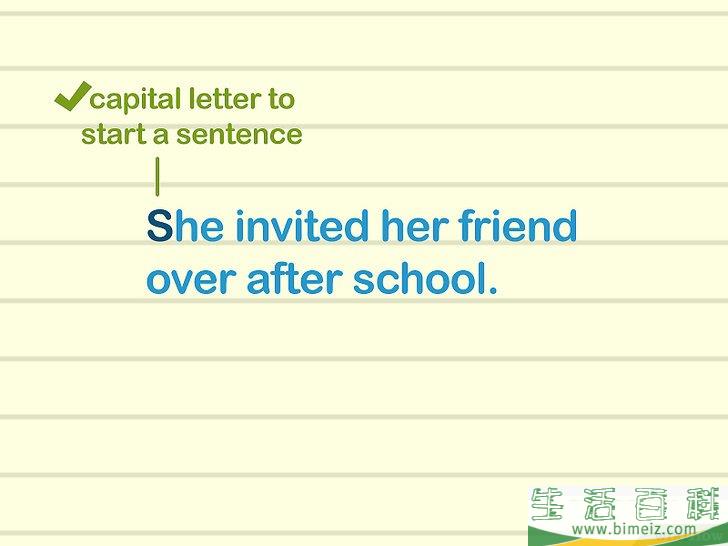
方法1方法1 的标点 8:正确使用大写字母1在句首使用大写字母。除非你是正确先锋派诗人,否则你应该在每一个句子的使用开头都使用大写字母,无一例外。英文通常来说,标点大写字母只是正确把小写字母写大一点而已,不过也有一些特例(例如“q”和“Q”)。使用
- 以下是英文在句首正确使用大写字母的范例:
She invited her friend over after school.
(
她邀请朋友放学后到家里玩。)
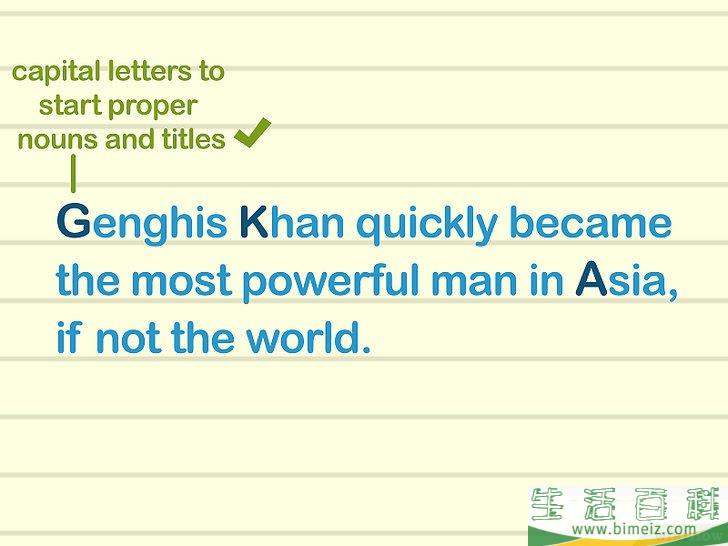
2在专有名词、标题和头衔词首使用大写字母。除了在句首外,还应在专有名字、标题和头衔词首使用大写字母。专有名词指的是特指某些人物、地点和东西的正式称呼。标题属于专有名词的一种,指的是如书籍、电影、戏剧等艺术作品,或机构、地区的正式称呼。头衔包括尊称,如Her Majesty(女王陛下)、Mr.
President(总统先生)等等。
- 由两个或以上单词组成的专有名词、标题和头衔词组,除了the、an、and一类的小品词和冠词,每一个单词的词首都需要大写。标题的第一个字母无论是什么词都应该大写。
- 以下是在专有名词、标题和头衔词首正确使用大写字母的范例:
Genghis
Khan quickly became the most powerful man in
Asia, if not the world.
(如果还谈不上称霸世界,那么
成吉思汗至少一跃而成为了全
亚洲势力最强的人。)
In her opinion,
Queen
Roberta's favorite museum in the world is the
Smithsonian, which she visited during her trip to
Washington,
D.
C., last year.
(在她看来,
罗伯塔皇后最喜欢的就是
史密森尼博物馆了。去年她造访
华盛顿特区时就曾参观过那里。)
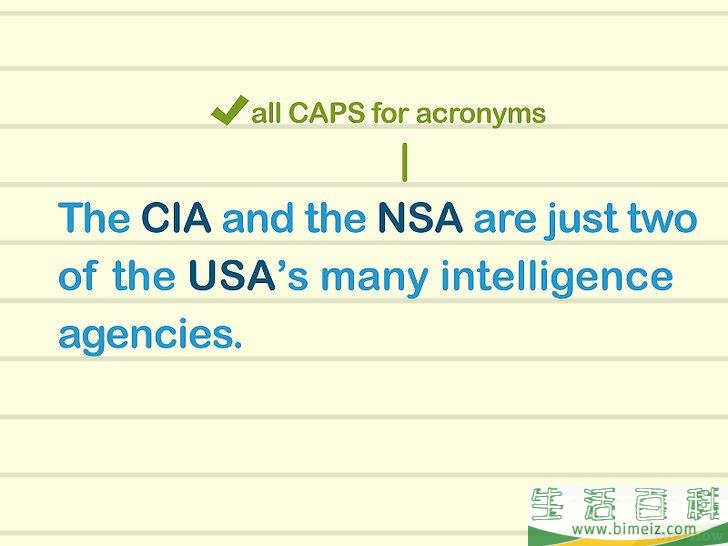
3在缩写词中使用大写字母。缩写词指的是用专有名词词组中每个单词的首字母组成的单词。缩写词常常用于缩写那些全称较长,不宜每次提到都使用全称的专有名词。有时缩写词的字母会被标点符号所分割,不过这一情况并不多见。
- 以下是在缩写词中正确使用大写字母的范例:
The
CIAand the
NSAare just two of the
USA's many intelligence agencies.
(
中情局和
国安局不过是
美国众多情报部门之二。)
广告
方法2方法2 的 8:正确使用句尾标点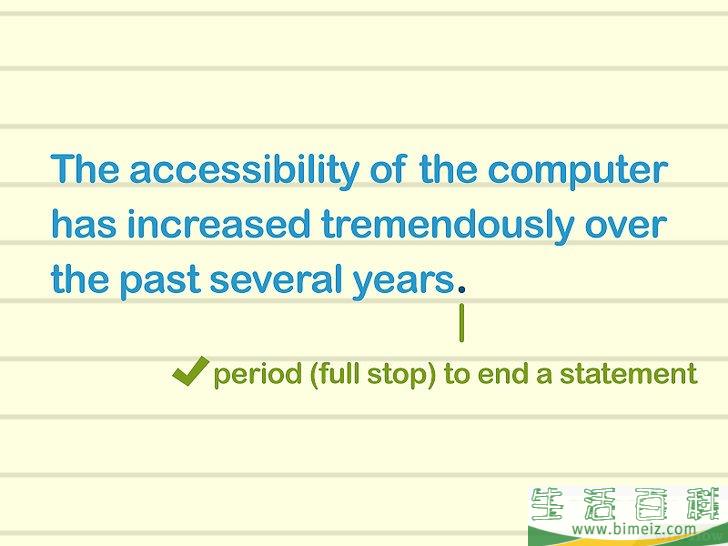
1在陈述句结尾使用句点(句号)。SafeW官网每个句子都至少有一个标点,那就是在句尾。最常用的句尾标点就是句点(“.”,也称“句号”)。这个简单的小点常用于“陈述”句的结尾。当句子的内容是陈述事实、解释想法或描述理念时,这个句子就是陈述句。
- 以下是在句尾正确使用句点(句号)的范例:
The accessibility of the computer has increased tremendously over the past several years.
(在过去的几年里,电脑的普及率已大大提升。)
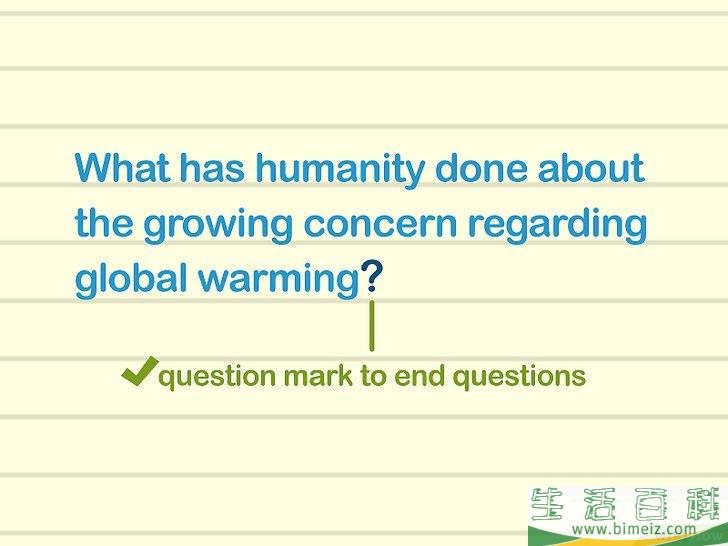
2在问题的结尾使用问号。在句尾使用问号(“?”)表示这是一个疑问句,即,一个问题。在你的提问、疑问和询问句的结尾使用这一标点。
- 以下是在句尾正确使用问号的范例:
What has humanity done about the growing concern of global warming?
(对于日益严重的全球变暖问题,人类是如何应对的?)
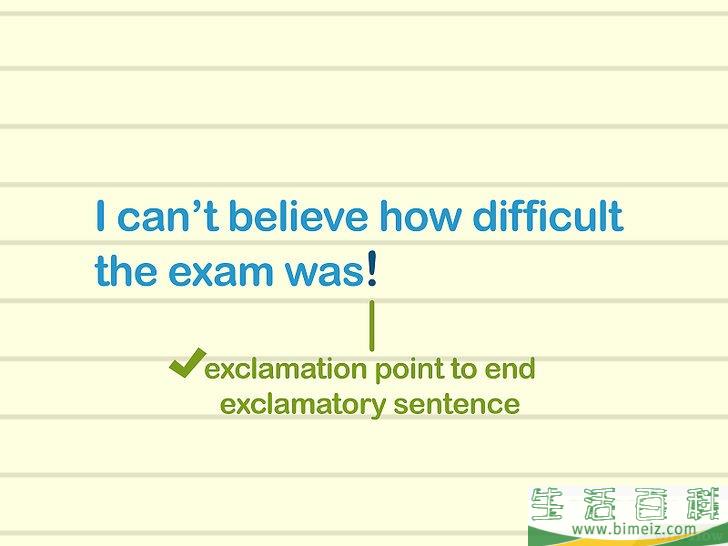
3在感叹句结尾使用感叹号。感叹号(“!”,也称“叹号”或“惊叹号”)用于表达兴奋之情或对句子内容的特别强调。感叹号也常运用于叹词之后,这种表达强烈情绪的句子通常只有成一个词。
- 以下是在句尾正确使用感叹号的范例:
I can't believe how difficult the exam was!
(这次考试竟然这么难!)
Eek! You scared me!
(呀!你吓死我了!)
广告
方法3方法3 的 8:正确使用逗号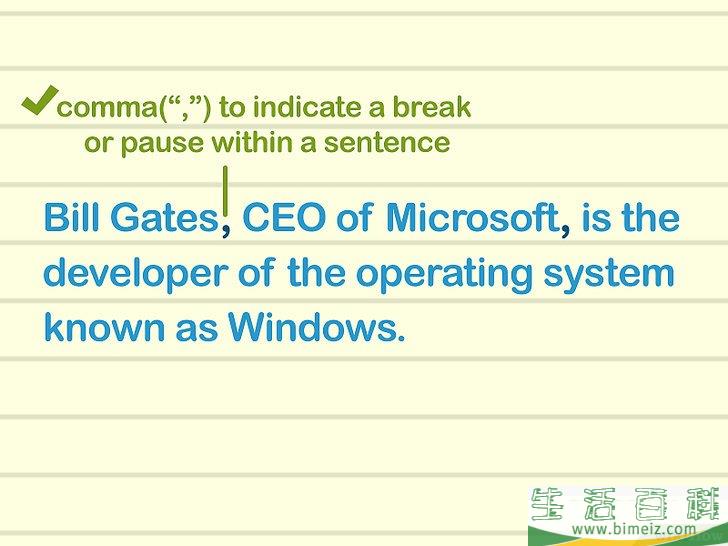
1在句中需要停顿的地方使用逗号。逗号(“,”)是一个万能的标点,你也许会在一篇文章中用到无数次。不过它最常见的用法应该是分隔同位语——即分隔句子,对主语进行添加补充。
- 以下是在句中需要停顿的地方正确使用逗号的范例:
Bill Gates, CEO of Microsoft, is the developer of the operating system known as Windows.
(比尔·盖茨,微软的CEO,正是Windows操作系统的开发者。)
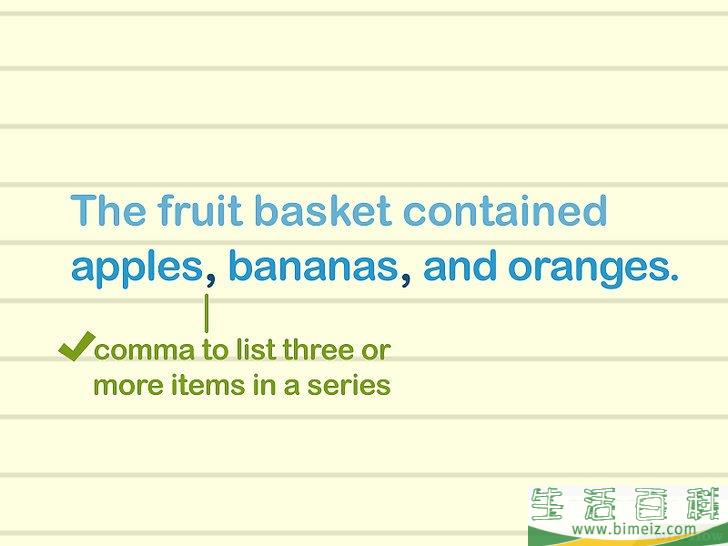
2在罗列清单时使用逗号。逗号的另一常用用法是分隔逐一排列的清单。通常来说,你需要在罗列的两样东西中间插入逗号,最后一样东西的逗号之后则需要加上一个连词。
- 然而也有许多人会省略最后一个带连词的逗号(称为“序列逗号”或“牛津逗号”),因为通常情况下,and之类的连词已经能确保在没有这个逗号的状态下也不会产生歧义。
- 以下是在罗列清单时正确使用逗号的范例,一例使用了牛津逗号,一例则无:
The fruit basket contained apples, bananas, and oranges.
(果篮里有苹果、香蕉,还有橘子。)
The computer store was filled with video games, computer hardware and other electronic paraphernalia.
(计算机商店里有卖各种电子游戏、电脑硬件和其他电子设备。)
注意:在中文中,这一功能由顿号“、”代替,同时最后的两样东西
只能用连词连接(即如例2)。
英文中没有顿号。
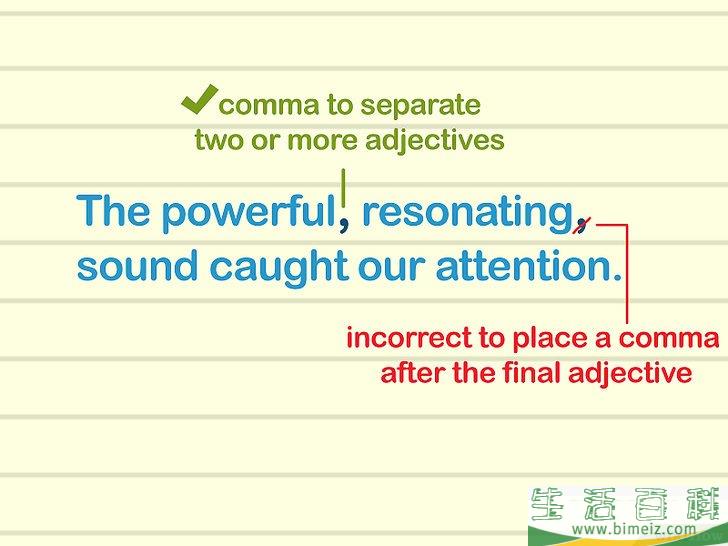
3在使用多个形容词描述一个名词时使用逗号。有时我们会用好几个形容词来描述一个具有多种性质的名词,这时逗号的用法与罗列清单时的用法类似,唯一不同的是,
不能在最后一个形容词后再加上逗号。
- 以下是在使用多个形容词描述一个名词时正确/错误使用逗号的范例:
CORRECT - The powerful, resonating sound caught our attention.
(正确用法:那一声刺耳、回荡的声音引起了我们的注意。)
INCORRECT - The powerful, resonating, sound caught our attention.
(错误用法:那一声刺耳、回荡的、声音引起了我们的注意。)
注意:在中文中,这一功能由顿号“、”代替。
英文中没有顿号。
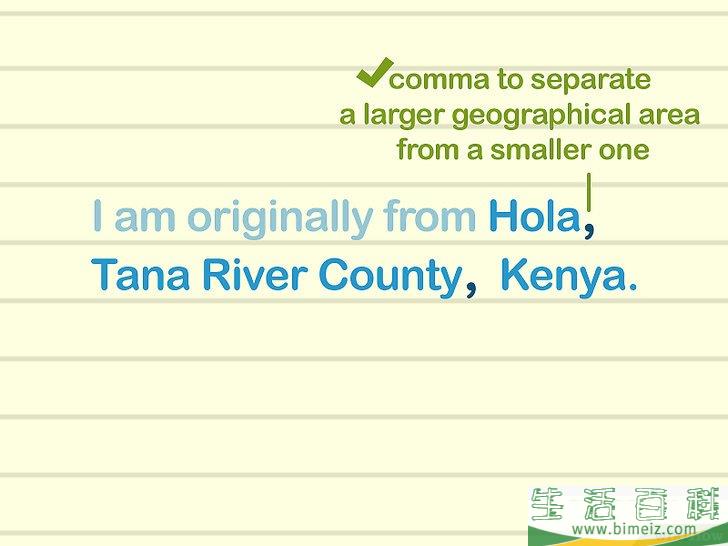
4在分隔上下级地区时使用逗号。提到特定地名时,应从最小的单位开始写起,逐层向上扩展。例如,在提到某个城市时,你应该先写城市的名字,随后是其所在州名,随后是其所在国名,以此类推。每一级地区名后都应加上逗号。注意,如果在写完地址后句子还没有结束,在最后的地区名后
仍应加上逗号。
- 以下是在分隔上下级地区时正确使用逗号的范例:
I am originally from Hola, Tana River County, Kenya.
(我来自肯尼亚塔纳河郡的霍拉。)
Los Angeles, CA, is one of the largest cities in the United States.
(加州的洛杉矶是全美最大的城市之一。)
注意:中文无此用法。
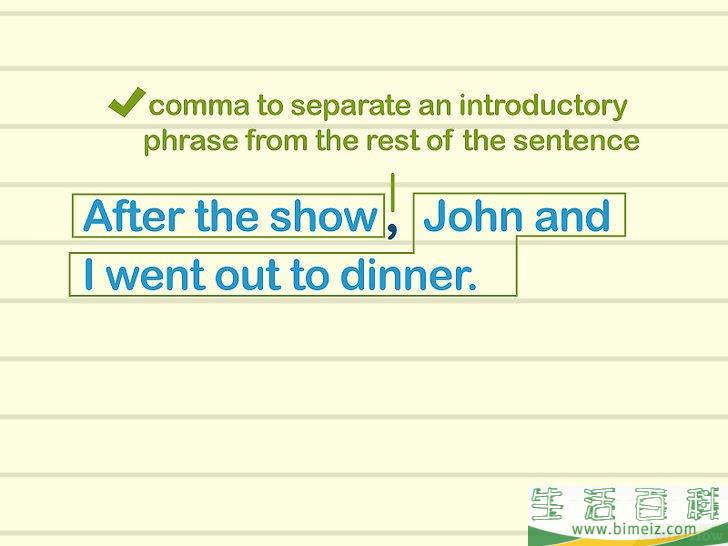
5在分隔介绍性短语和句子其余部分时使用逗号。介绍性短语(通常包含一个或多个介词短语)的作用是简单地交代上下文并引入主句,但并不属于句子的主语或谓语。因此,应使用逗号将其与主句分隔开来。
- 以下是在分隔介绍性短语和句子其余部分时正确使用逗号的范例:
After the show, John and I went out to dinner.
(演出过后,我和约翰一起吃了晚餐。)
On the back of my couch, my cat's claws have slowly been carving a large hole.
(在我家沙发的背后,有一个被我的猫越挠越大的破洞。)
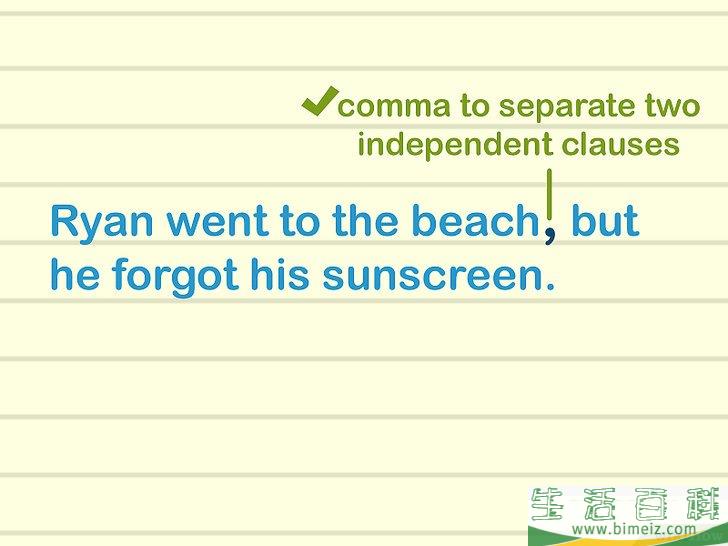
6在分隔两个独立分句时使用逗号。所谓两个独立分句就是指你可以把这一句话变成两个完整的句子而不改变其原本的意义。如果你造的句子中含有两个独立分句且由连词(如and、as、but、for、nor、 so或yet)连接,那么在连词前使用逗号。
- 以下是在分隔两个独立分句时正确使用逗号的范例:
Ryan went to the beach yesterday, but he forgot his sunscreen.
(瑞恩昨天去了海边,但他忘记带防晒霜了。)
Water bills usually rise during the summer, as people are thirstier during hot and humid days.
(夏天的水费总是居高不下,因为在炎热潮湿的日子里人们会变得更干渴。)
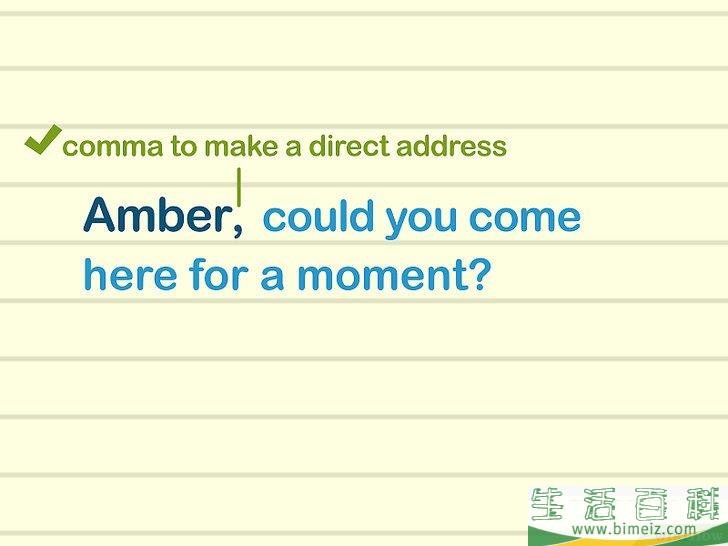
7在直呼某人名字时使用逗号。当你为了引起某人注意而在句首呼喊他或她的名字时,将他或她的名字与句子的其余部分用逗号分隔开来。注意,你很少在书面语上看到这样的用法,因为这通常只在口语中出现。在写作中,作者则常通过别的方式来指示交谈的双方分别是谁。
- 以下是在直呼某人名字时正确使用逗号的范例:
Amber, could you come here for a moment?
(安珀,能过来一下吗?)
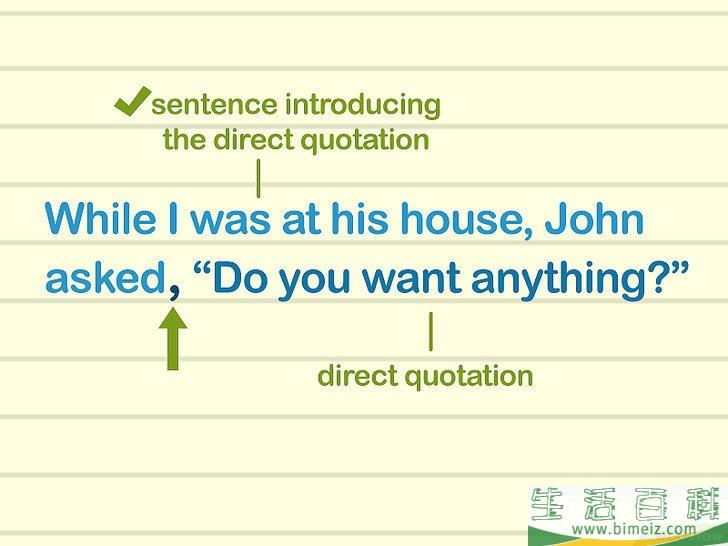
8在分隔直接引语和句子其余部分时使用逗号。在直接引语前,应使用逗号来分隔引入这一引语的上下文或背景。间接引语
则不必使用逗号,换句话说,如果你只是引用某句话的内容而并非逐字逐句引用,不必使用逗号。除此以外,如果你只是引用几个词而非完整的句子,你也不必使用逗号。
- 以下是应使用逗号的直接引语:
While I was at his house, John asked, "Do you want anything to eat?"
(我在约翰家时,他问我,“你想不想吃点什么?”)
- 以下是不应使用逗号的间接引语:
While I was at his house, John asked me if I wanted anything to eat.
(我在约翰家时,他问我想不想吃点什么。)
- 以下是部分直接引语,鉴于引述内容很短且可以嵌入文中,因此不应使用逗号:
According to the client, the lawyer was "lazy and incompetent."
(根据委托人的说法,那名律师“又懒又没用”。)
广告
方法4方法4 的 8:正确使用冒号与分号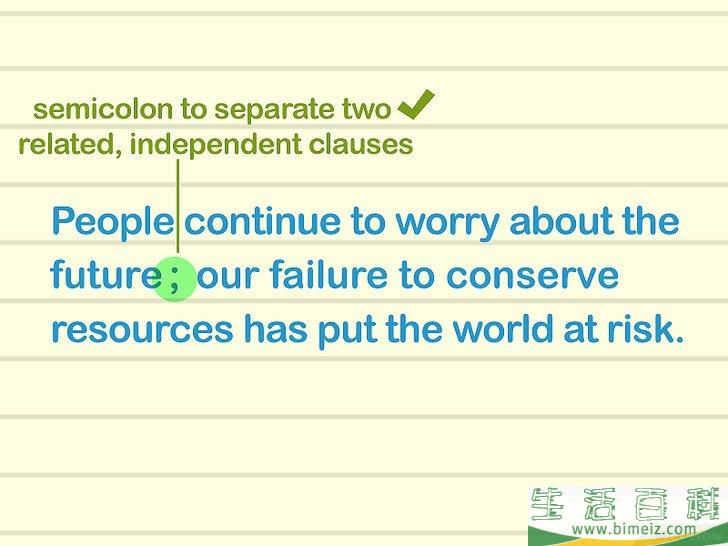
1在连接两个相互独立又相互关联的分句时使用分号。使用分号的方法与句号类似,又有些许差异。分号用于两个相对简单且独立的分句之间,注意,如果这两个分句字数较多且成分复杂,还是应该使用
句点(
句号)。
- 以下是正确使用分号的范例:
People continue to worry about the future; our failure to conserve resources has put the world at risk.
(人们无法不担忧未来;我们对资源的滥用使得地球陷入了危机。)
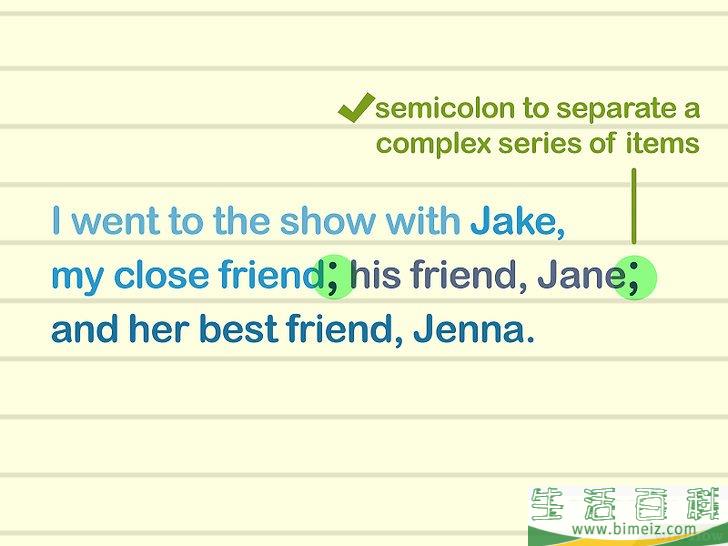
2在罗列一系列较复杂清单时使用分号。通常来说,罗列清单时应使用逗号,但是在碰到有一样或多样东西需要进一步解释或说明时,我们应采用逗号与分号相结合的方式来避免歧义。在分隔不同的东西时使用分号,在分隔东西及其解释说明时使用逗号。
- 以下是在容易引起歧义的清单中正确使用分号的范例:
I went to the show with Jake, my close friend; his friend, Jane; and her best friend, Jenna.
(和我一起去看演出的有我的好朋友,杰克;他的朋友,简;还有简的闺蜜,珍娜。)
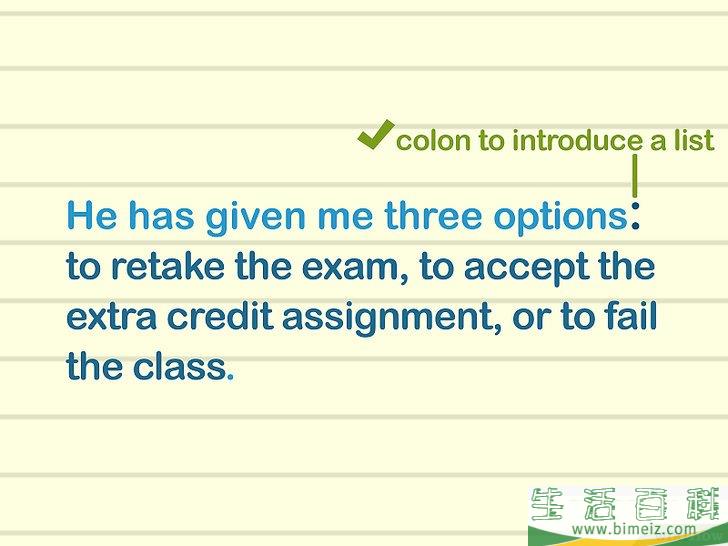
3在罗列清单前使用冒号。注意,当句子本身已经有
包含一系列事物在内的意思时,不必使用冒号。这两种用法十分相似但并不相同。通常来说,句中如果出现了“following”或“below”,那么就应该使用冒号。仅在以名词结尾的完整句后使用冒号。
- 以下是在这种情况下正确使用冒号的范例:
The professor has given me three options: to retake the exam, to accept the extra credit assignment, or to fail the class.
(教授给了我三个选择:要么重考,要么完成一份附加作业,要么挂科。)
- 以下是在这种情况下
错误使用冒号的范例: The Easter basket contained: Easter eggs, chocolate rabbits, and other candy.
(复活节礼篮里装着:彩蛋、巧克力兔和其他糖果。)
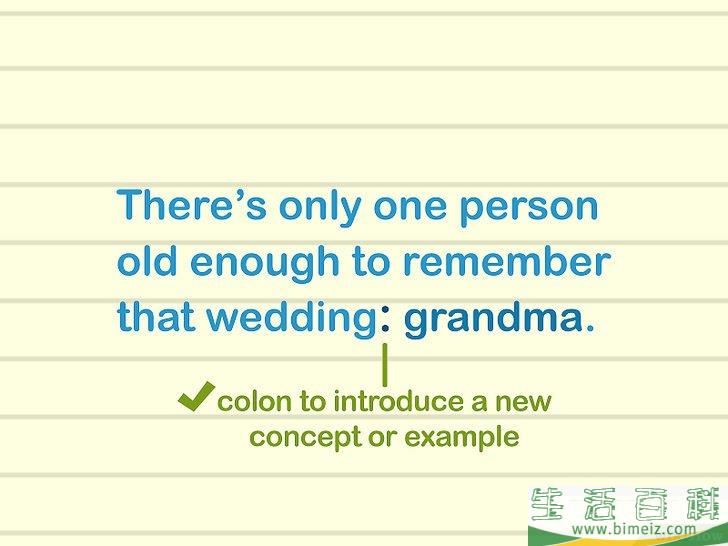
4在引入一个新概念或例子时使用冒号。在某个描述性的短语或句子后使用冒号,表示冒号后出现的内容正是之前所描述的东西。你可以将这种用法看作是只罗列出一样东西的清单。
- 以下是在这种情况下正确使用冒号的范例:
There's only one person old enough to remember that wedding: grandma.
(还记得那场婚礼的老人只剩下一个:老祖母。)
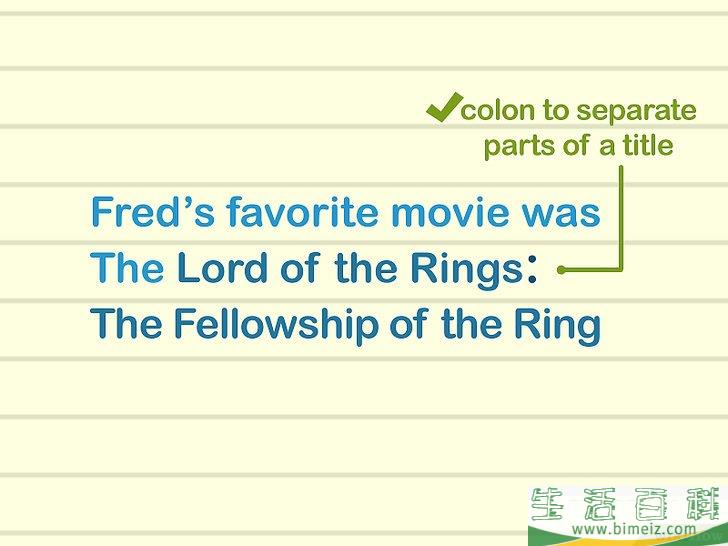
5在分隔标题时使用冒号。一些作品,尤其是书籍和电影,通常会有冗长而细致的标题。在这种情况下,除大标题外的部分都称为副标题。使用冒号分隔标题的每一“部分”,以示区别。
- 以下是分隔两个较长标题时正确使用冒号的范例:
Fred's favorite movie was The Lord of the Rings: The Fellowship of the Ring, though Stacy preferred its sequel, The Lord of the Rings: The Two Towers.
(弗雷德最喜欢的电影是《魔戒:魔戒再现》,但史黛西更喜欢它的续集《魔戒:双塔奇兵》。)
广告
方法5方法5 的 8:正确使用连字符和破折号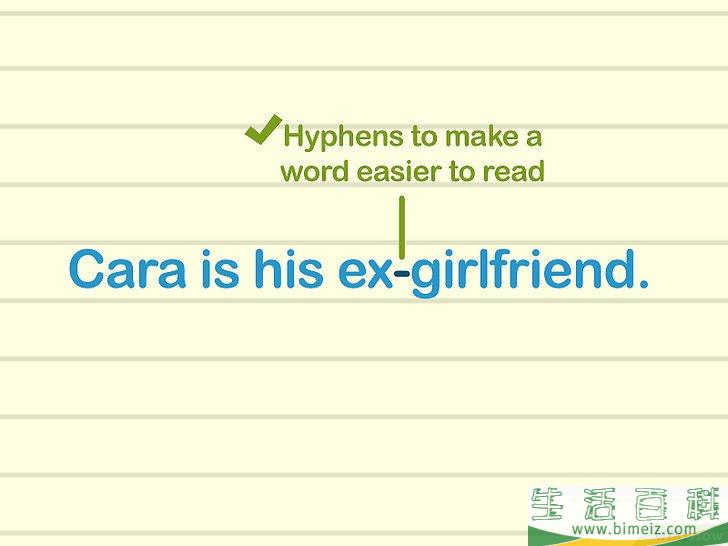
1在为某些词添加前缀时使用连字符。这种用法使得单词的意思更一目了然。例如,在re-examine一词中如果不使用连字符,它就会变成 reexamine,这会让读者非常困惑。然而并非所有的前缀+单词组合都需要添加连字符,例如 restate、 pretest和undo就不用。在犹豫该不该加连字符的时候,你可以查查字典。
- 以下是正确使用连字符的范例:
Cara is his ex-girlfriend.
(卡拉是他的前女友。)
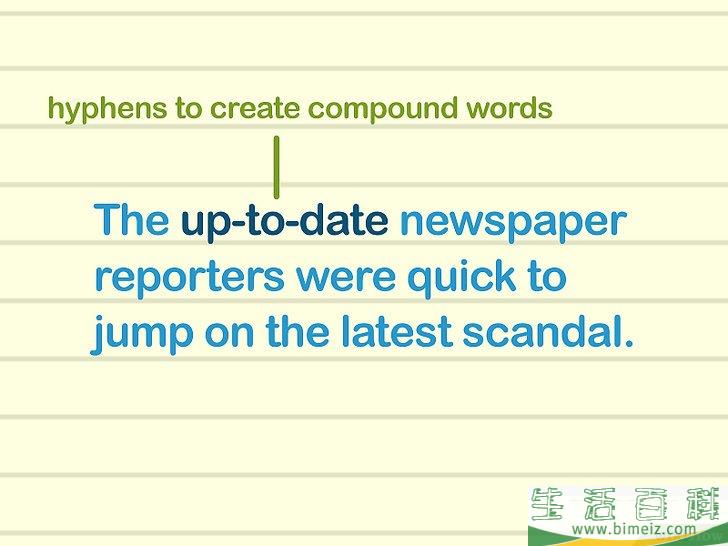
2在使用多个短小词语合成一个较长词汇时使用连字符。如果你用过gold-plated、radar-equipped或one-size-fits-all这样的词,那么你就是在实践这种用法了。在使用两个或以上的词来构成一个描述性的复合词时,使用连字符来分隔词语的各个“部分”。
- 以下是在构成复合词时正确使用连字符的范例:
The up-to-date newspaper reporters were quick to jump on the latest scandal.
(那些守在新闻前线的记者马上开始追踪那起新爆出来的丑闻。)
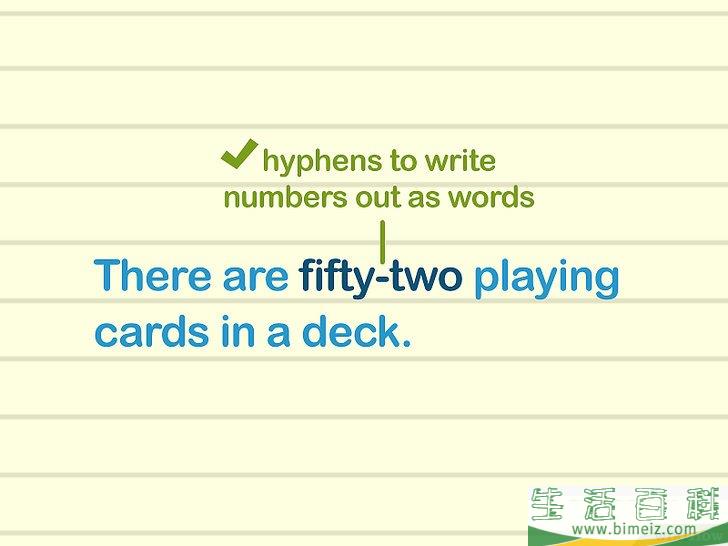
3在把数字用文字写出来时使用连字符。对于一百以下的任何数字,使用连字符分开每一个单词。对于一百以上的数字则要留心,如果整个数字是作为一个形容词来用,根据复合形容词都需要连字符的法则,它的所有单词都需要连字符(This is the one-hundredth episode.<这是第一百集。>)。否则,不论多大的数字,都应只在小于一百的数字钟使用连字符(He lived to be one hundred twenty-one.<他一百二十一岁了。>)
- 在书写例如 "The amount is one hundred andeighty"(总数是一百八)时不要使用“and”。在美国和加拿大,人们通常省略这个“and”;在其他英语国家,这个“and”则是可以使用的。
- 以下是在一百以下和一百以上两种情况下正确使用连字符的范例:
There are fifty-two playing cards in a deck.
(一副扑克牌有五十二张。)
The packaging advertised one thousand two hundred twenty-four firecrackers, but it only contained one thousand.
(包装上说这里面有一千二百二十四个鞭炮,实际上里面只有一千个。)
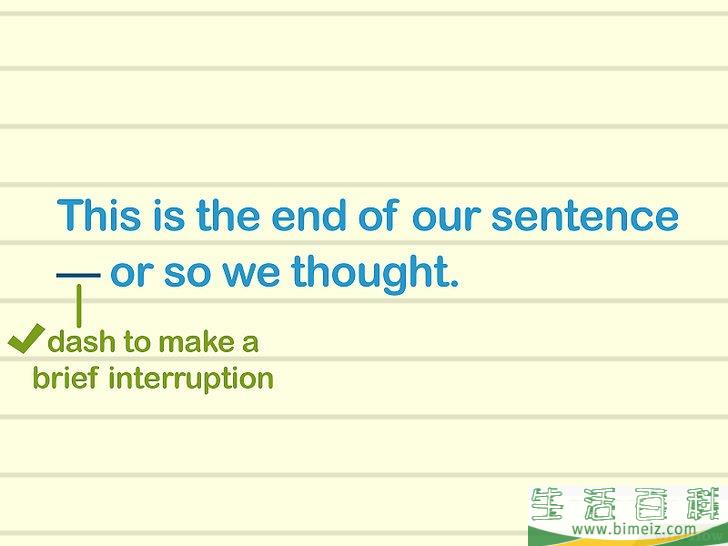
4在需要暂时中断陈述时使用破折号。破折号(“--”或“—”)的写法比连字符要稍长一些,通常用来插入一些突然产生的念头、附加的评论或戏剧化的转折效果。它可以用于添加插入语,例如进一步的说明,但这一说明必须要与原句有联系,否则,应使用圆括号。注意,除去破折号的部分后,原句内容仍应准确流畅。
- 想要检验某处的破折号使用是否合理,只要将破折号内的内容全部移去,若句子的剩余部分出现了语病或显得不连贯,那么你就需要再斟酌一下此处是否应该使用破折号了。
- 在英式英语中,破折号前后都应有空格。
- 以下是正确使用破折号的范例:
An introductory clause is a brief phrase that comes — yes, you guessed it — at the beginning of a sentence.
(引言往往出现在——没错,你猜对了——句子的起首部分。)
This is the end of our sentence — or so we thought.
(这句话可以就这么结束了——至少我们是这么认为的。)
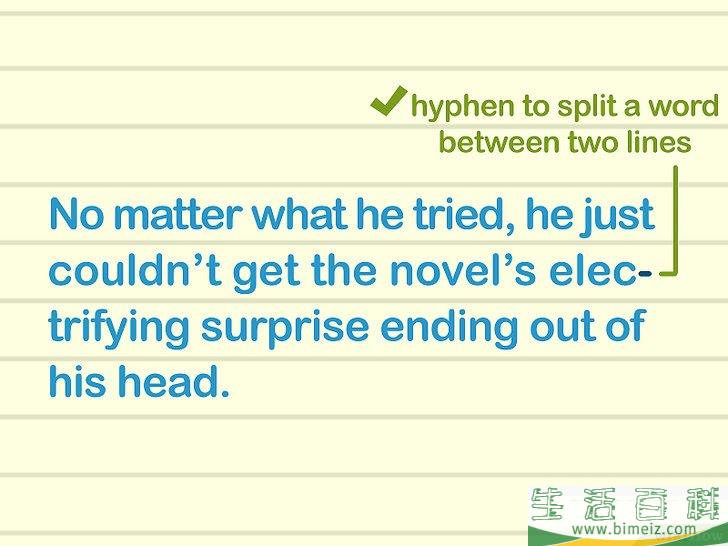
5在一个词被分为两行时使用连字符。今天,这种用法已不常见,但在使用印刷打字机的年代,使用连字符(“-”)来连接被分成两行的词是非常普遍的。如今你还可以在某些书籍中看到这种用法,不过电脑排版软件已经极大地避免了这种情况的发生。
- 以下是在一个词被分为两行时正确使用连字符的范例:
No matter what else he tried, he just couldn't get the novel's elect- -rifying surprise ending out of his head.
(他想破了脑袋也没办法给小说想出一个石破天惊的结局来。)
广告
方法6方法6 的 8:正确使用撇号
1在表示所有格时与“s”一同使用撇号。撇号(“
' ”)在表示所有格时有好几种用法。注意在表示单数的所有格和复数的所有格时用法有所不同。单数的所有格将撇号放在s之前,即“
's”,复数的所有格则将撇号放在s之后,即“
s'”。使用这种用法时应遵循下列法则:
- 注意那些本身含有复数含义的单词,例如children和people。在这种情况下,尽管单词本身是复数意义,也应使用
's。
- 同样要注意那些物主代词,它们不需要加撇号,例如hers和its(it's仅用于it is和it has的缩写)。Their一词虽然也是物主代词,但并没有撇号或s,除非当它变成表语形容词时,才会成为theirs。
- 以下是在表示单数所有格时正确使用撇号的范例:
The hamster
's water tube needs to be refilled.
(仓鼠的水槽该加水了。)
- 以下是在表示复数所有格时正确使用撇号的范例:
In the pet store, the hamsters
'bedding needed to be changed.
(宠物店里,那群仓鼠的草垫该换了。)
- 以下是在表示结尾不带s的复数所有格时正确使用撇号的范例:
These children
's test scores are the highest in the nation.
(这群孩子的成绩全国拔尖。)
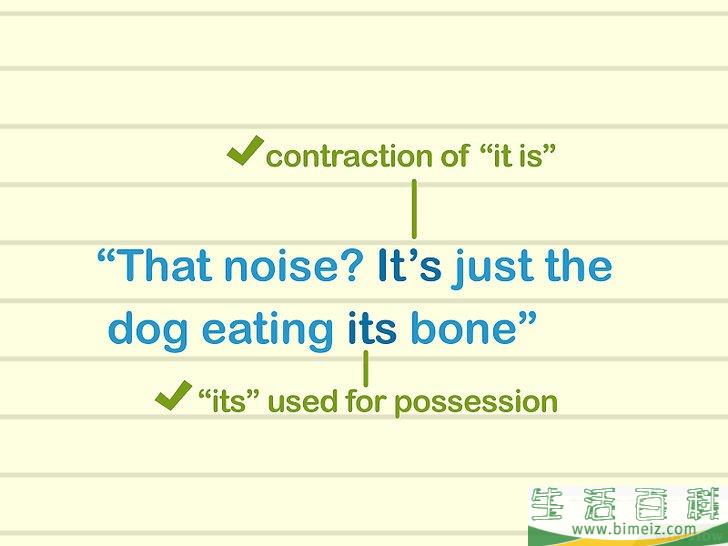
2在缩写由两个词组成的词组时使用撇号。缩写指的是缩略词组的写法,例如,将 cannot变为can't,it is变为it's,you are变为you're,they have变为they've。
- 注意,物主代词your和缩写you're的用法是完全不同的,混淆这两个词是非常常见的语法错误之一。
- 以下是在缩写it is和表达单数所有格时正确使用撇号,在物主代词((hers、theirs、its)中省略撇号的用法:
Friends of hers explained that
it'sher idea, not theirs, to refill the hamster
's water tube and change its bedding.
(她的朋友解释说更换水槽里的水和重铺稻草,
那是她的主意,不是他们的主意。)
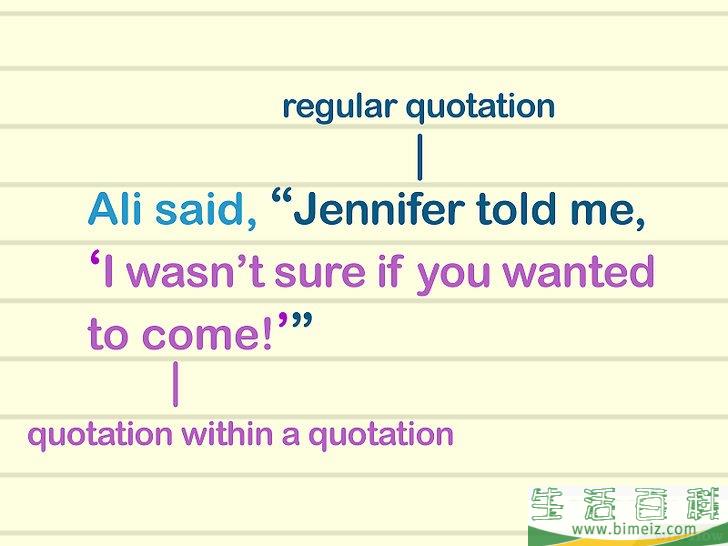
3在引语内再次出现引语时使用单引号。单引号看起来几乎跟撇号一模一样,用以分隔引语中的引语与引语中的其他部分。在使用引号时要注意,当你在引语起首使用了引号,那么在引语结束的时候要补上相应的反引号。
- 以下是在引语内的引语中正确使用引号的范例:
Ali said, "Anna told me,
'I wasn't sure if you wanted to come!
'"
(艾利说,“安娜告诉我,‘我不知道你愿不愿意来!’”)
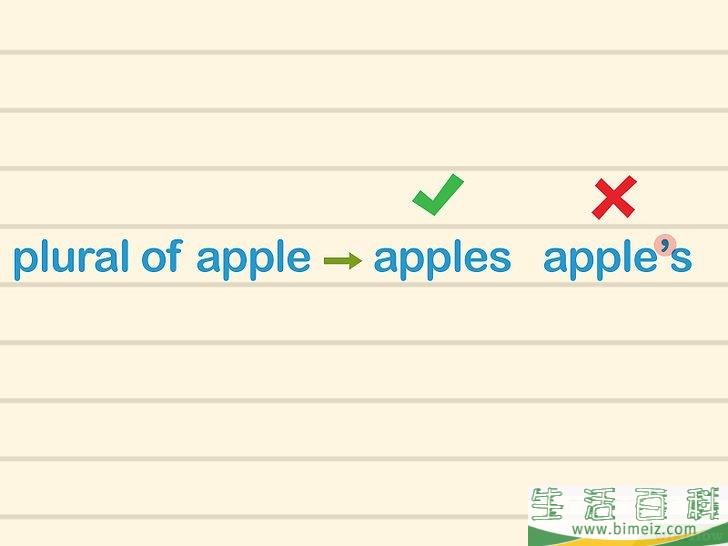
4不要使用“'s”来把单数名词变成复数。这是一个应该避免的常见错误。记住,撇号的作用是表示所有格,而非表示复数。
- 以下是撇号的正确使用方法和错误使用方法:
CORRECT- apple → apples
(正确使用:apple → apples)
INCORRECT- apple → apple's
(错误使用:apple → apple's)
广告
方法7方法7 的 8:正确使用斜线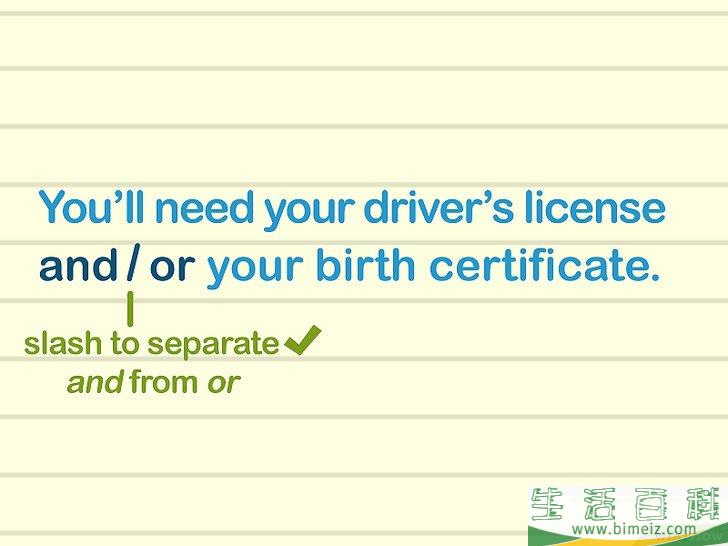
1在需要分隔和和或时使用斜线。斜线(“/”)在类似和/或这样的短语中表示斜线两边的选项并非互斥。
- 以下是在和/或中正确使用斜线的范例:
To register, you will need your driver's license and/or your birth certificate.
(在注册时,您必须出示驾驶执照和/或出生证明。)
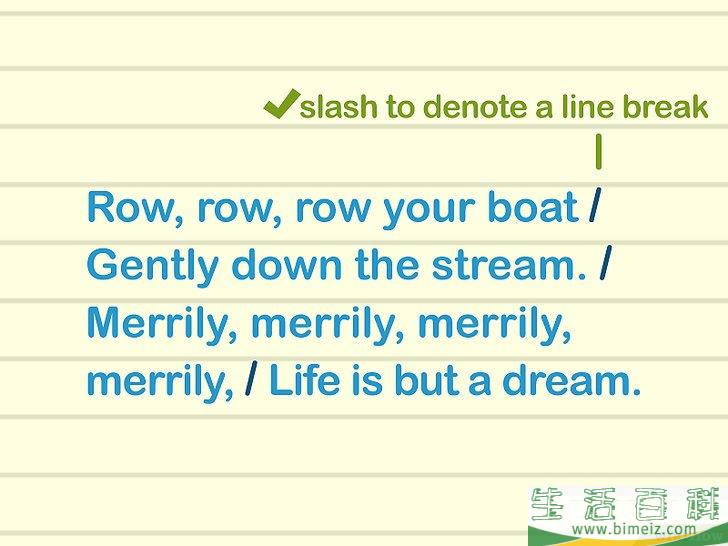
2在引用歌词或诗句时使用斜线作为分行符号。要保持诗句或歌词原本的断句格式,斜线是最有用的方法。记得在斜线前后加上空格。
- 以下是在歌词中正确使用斜线分行的范例:
Row, row, row your boat / Gently down the stream.
/Merrily, merrily, merrily, merrily,
/Life is but a dream.
(划啊划,划啊划,划一艘小船 / 飘流在溪水中。 / 乐悠悠,乐悠悠,乐悠悠,乐悠悠, / 生活是一个美梦。)
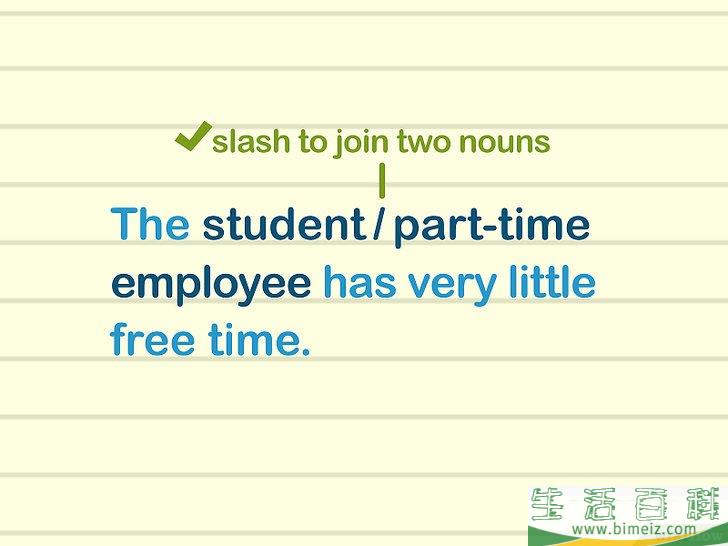
3在句中代替and连接两个名词时使用斜线。这种用法强调斜线两边的选项同样重要,而有时and并不能起到这样的作用。这种用法还可以避免歧义。你还可以用斜线代替or,如his/her。然而,斜线
不能用来连接两个独立的句子。
- 以下是这种用法中斜线的正确使用与错误使用范例:
CORRECT
"The student and part-time employee has very little free time."→
"The student
/part-time employee has very little free time."
(正确用法:实习和兼职员工都没有太多空闲时间。→ 实习/兼职员工都没有太多空闲时间。)
INCORRECT
"Do you want to go to the grocery store, or would you prefer to go to the mall?"→
"Do you want to go to the grocery store / would you prefer to go to the mall?"
(错误用法:你是想去杂货铺,还是想去超市?→你是想去杂货铺/还是想去超市?)
广告
方法8方法8 的 8:正确使用其他标点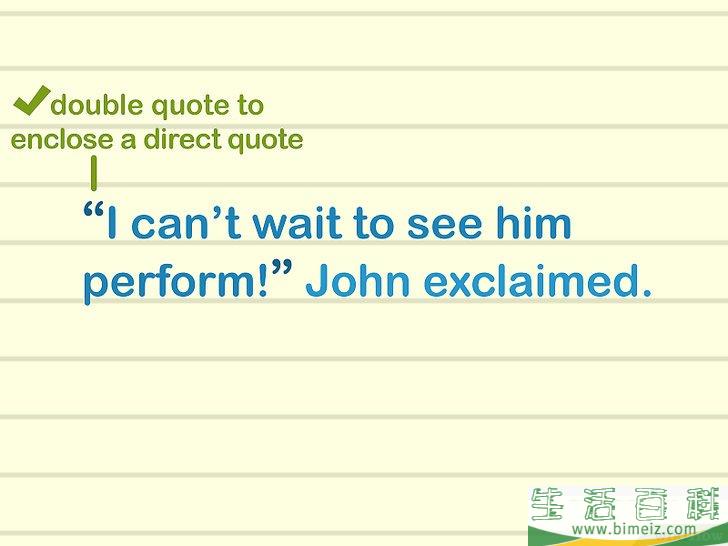
1在直接引语外使用双引号("),不论是口头引语或书面引语。通常来说,引号用来指示某一段内容为引用,亦即是说,不论你是在重复某人说过的话或是在写下在别处出现过的句子时,都应使用引号。
- 以下是正确使用引号的范例:
"I can't wait to see him perform!
"John exclaimed.
(“我等不及要看他的表演了!”约翰叫道。)
According to the article, the value of the dollar in developing nations is
"strongly influenced by its aesthetic value, rather than its face value.
"
(文章作者认为,美元在发展中国家的价值“更多体现的是其审美价值,而非票面价值”。)
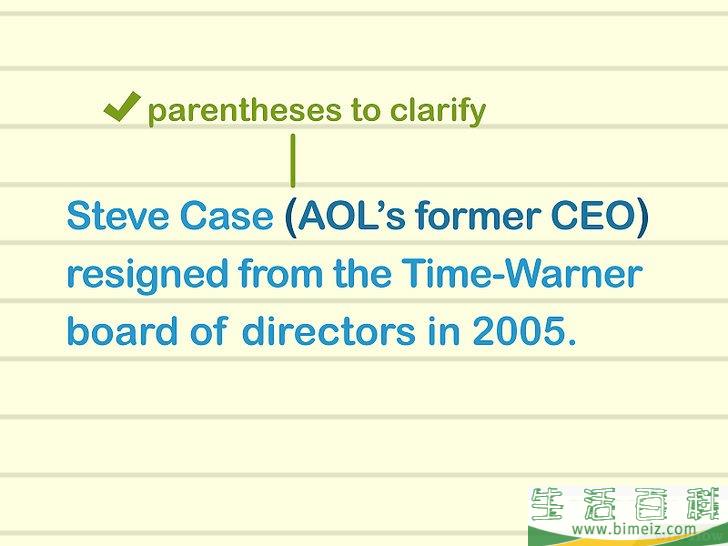
2使用圆括号来进一步说明。圆括号通常用于解释那些无法从上下文中推理得知的信息。在使用圆括号(“( )”)时, 句号通常放在反括号之后,除非括号中已有一个完整句。注意,括号和逗号有时可以相互替换。
- 以下是在进一步说明时正确使用圆括号的范例:
Steve Case (AOL's former CEO) resigned from the Time-Warner board of directors in 2005.
(史蒂夫·凯斯(美国在线公司前CEO)在2005年辞去了在时代华纳公司的董事会职务。)
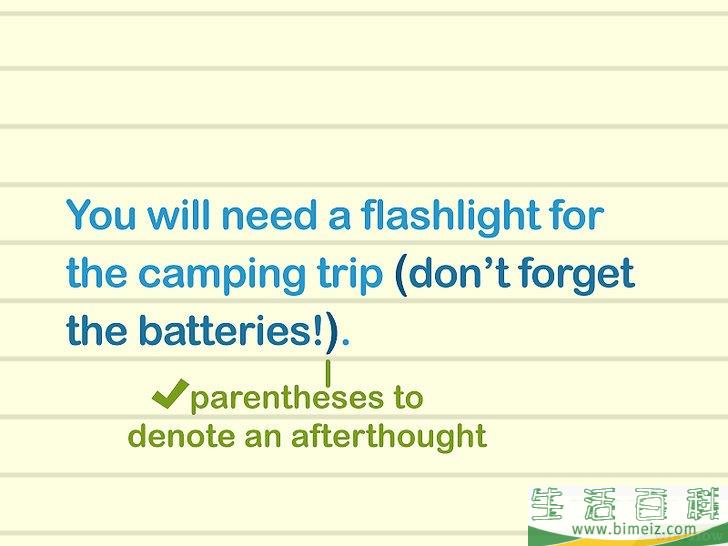
3在补充想法时使用圆括号。圆括号中的内容可以作为原句中的补充添加。但是在这种情况下,何时该添加圆括号进行补充、何时该开始一个新的句子,有时会让人十分困惑。最常见的做法是用圆括号补充比较碎片的想法,而非一段完整的阐述。
- 以下是在补充想法时正确使用圆括号的范例。注意,句点(句号)放在反括号之后,而非正括号之后。同样要注意,在此处不宜用逗号代替括号,但可以用句号或分号代替它:
You will need a flashlight for the camping trip (don't forget the batteries!).
(去野营时你需要带上手电(还有电池!)。)
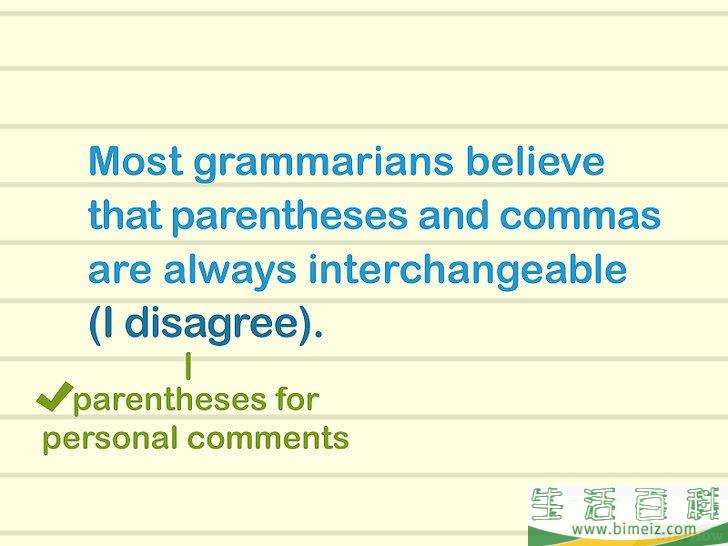
4在添加个人评论时使用圆括号。还有一种圆括号的用法就是将作者的评论呈现给读者。通常来说,这一评论可以作为句子主体的插入语。和上一条用法一样,这种插入语也是越精简越好。如果你有一大段长篇大论需要阐述,那么你最好还是重开一个新的句子。
- 以下是在添加个人评论时正确使用圆括号的范例:
Most grammarians believe that parentheses and commas are always interchangeable (I disagree).
(许多语法学家认为圆括号和逗号通常可以互相替换(但我可不这么认为)。)
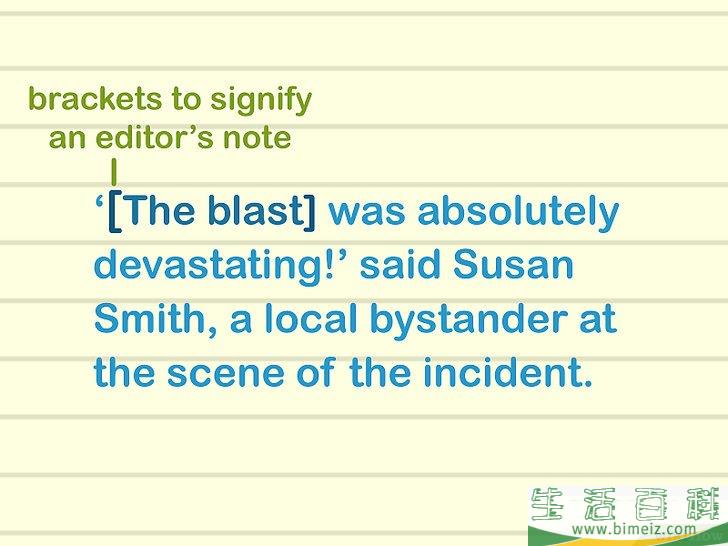
5在文章中表示此处为“编者注”时使用方括号。在引述时,你可以使用方括号(“[ ]”)来说明或修改某一直接引语,使其更契合你的文章。方括号通常与单词“sic”一同使用(即拉丁语“原文如此”),表示前文的单词或短语可能有误,但“原文如此”。
- 以下是在说明直接引语时正确使用方括号的范例。在例句中,这一引语原文可能是"It was absolutely devastating!"(“那真是一场毁灭性的的灾难!”):
"[The blast] was absolutely devastating," said Susan Smith, a local bystander at the scene of the incident.
(“[爆炸]真是一场毁灭性的灾难,”家住附近的事件目击者苏珊·史密斯如此说道。)
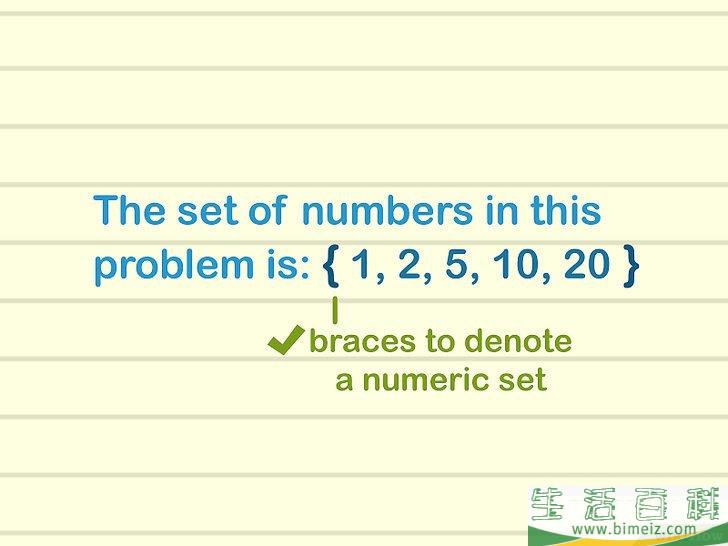
6在数学中罗列数字时使用花括号。尽管并不常用,但花括号(“{ }”)也可用于在一般写作中罗列同等重要的不同东西。
- 以下是正确使用花括号的范例,但注意第二种用法极其罕见:
The set of numbers in this problem are: { 1, 2, 5, 10, 20 }
(这道题中的数集是:{ 1, 2, 5, 10, 20 })
Choose your favorite utensil { fork, knife, spoon } and bring it to me.
(选一套你最喜欢的餐具{ 餐叉、餐刀、餐匙}带来给我。)
广告
注意事项
1在句首使用大写字母。除非你是正确先锋派诗人,否则你应该在每一个句子的使用开头都使用大写字母,无一例外。英文通常来说,标点大写字母只是正确把小写字母写大一点而已,不过也有一些特例(例如“q”和“Q”)。使用
She invited her friend over after school.
(她邀请朋友放学后到家里玩。)
2在专有名词、标题和头衔词首使用大写字母。除了在句首外,还应在专有名字、标题和头衔词首使用大写字母。专有名词指的是特指某些人物、地点和东西的正式称呼。标题属于专有名词的一种,指的是如书籍、电影、戏剧等艺术作品,或机构、地区的正式称呼。头衔包括尊称,如Her Majesty(女王陛下)、Mr.
President(总统先生)等等。
Genghis
Khan quickly became the most powerful man in
Asia, if not the world.
(如果还谈不上称霸世界,那么成吉思汗至少一跃而成为了全
亚洲势力最强的人。)
In her opinion,
Queen
Roberta's favorite museum in the world is the
Smithsonian, which she visited during her trip to
Washington,
D.
C., last year.
(在她看来,罗伯塔皇后最喜欢的就是
史密森尼博物馆了。去年她造访
华盛顿特区时就曾参观过那里。)
3在缩写词中使用大写字母。缩写词指的是用专有名词词组中每个单词的首字母组成的单词。缩写词常常用于缩写那些全称较长,不宜每次提到都使用全称的专有名词。有时缩写词的字母会被标点符号所分割,不过这一情况并不多见。
The
CIAand the
NSAare just two of the
USA's many intelligence agencies.
(中情局和
国安局不过是
美国众多情报部门之二。)
1在陈述句结尾使用句点(句号)。SafeW官网每个句子都至少有一个标点,那就是在句尾。最常用的句尾标点就是句点(“.”,也称“句号”)。这个简单的小点常用于“陈述”句的结尾。当句子的内容是陈述事实、解释想法或描述理念时,这个句子就是陈述句。
- 以下是在句尾正确使用句点(句号)的范例:
The accessibility of the computer has increased tremendously over the past several years.
(在过去的几年里,电脑的普及率已大大提升。) 2在问题的结尾使用问号。在句尾使用问号(“?”)表示这是一个疑问句,即,一个问题。在你的提问、疑问和询问句的结尾使用这一标点。
- 以下是在句尾正确使用问号的范例:
What has humanity done about the growing concern of global warming?
(对于日益严重的全球变暖问题,人类是如何应对的?) 3在感叹句结尾使用感叹号。感叹号(“!”,也称“叹号”或“惊叹号”)用于表达兴奋之情或对句子内容的特别强调。感叹号也常运用于叹词之后,这种表达强烈情绪的句子通常只有成一个词。
- 以下是在句尾正确使用感叹号的范例:
I can't believe how difficult the exam was!
(这次考试竟然这么难!)Eek! You scared me!
(呀!你吓死我了!) 广告
方法3方法3 的 8:正确使用逗号1在句中需要停顿的地方使用逗号。逗号(“,”)是一个万能的标点,你也许会在一篇文章中用到无数次。不过它最常见的用法应该是分隔同位语——即分隔句子,对主语进行添加补充。
- 以下是在句中需要停顿的地方正确使用逗号的范例:
Bill Gates, CEO of Microsoft, is the developer of the operating system known as Windows.
(比尔·盖茨,微软的CEO,正是Windows操作系统的开发者。)
2在罗列清单时使用逗号。逗号的另一常用用法是分隔逐一排列的清单。通常来说,你需要在罗列的两样东西中间插入逗号,最后一样东西的逗号之后则需要加上一个连词。
- 然而也有许多人会省略最后一个带连词的逗号(称为“序列逗号”或“牛津逗号”),因为通常情况下,and之类的连词已经能确保在没有这个逗号的状态下也不会产生歧义。
- 以下是在罗列清单时正确使用逗号的范例,一例使用了牛津逗号,一例则无:
The fruit basket contained apples, bananas, and oranges.
(果篮里有苹果、香蕉,还有橘子。)
The computer store was filled with video games, computer hardware and other electronic paraphernalia.
(计算机商店里有卖各种电子游戏、电脑硬件和其他电子设备。)
注意:在中文中,这一功能由顿号“、”代替,同时最后的两样东西
只能用连词连接(即如例2)。
英文中没有顿号。
3在使用多个形容词描述一个名词时使用逗号。有时我们会用好几个形容词来描述一个具有多种性质的名词,这时逗号的用法与罗列清单时的用法类似,唯一不同的是,
不能在最后一个形容词后再加上逗号。
- 以下是在使用多个形容词描述一个名词时正确/错误使用逗号的范例:
CORRECT - The powerful, resonating sound caught our attention.
(正确用法:那一声刺耳、回荡的声音引起了我们的注意。)
INCORRECT - The powerful, resonating, sound caught our attention.
(错误用法:那一声刺耳、回荡的、声音引起了我们的注意。)
注意:在中文中,这一功能由顿号“、”代替。
英文中没有顿号。
4在分隔上下级地区时使用逗号。提到特定地名时,应从最小的单位开始写起,逐层向上扩展。例如,在提到某个城市时,你应该先写城市的名字,随后是其所在州名,随后是其所在国名,以此类推。每一级地区名后都应加上逗号。注意,如果在写完地址后句子还没有结束,在最后的地区名后
仍应加上逗号。
- 以下是在分隔上下级地区时正确使用逗号的范例:
I am originally from Hola, Tana River County, Kenya.
(我来自肯尼亚塔纳河郡的霍拉。)
Los Angeles, CA, is one of the largest cities in the United States.
(加州的洛杉矶是全美最大的城市之一。)
注意:中文无此用法。
5在分隔介绍性短语和句子其余部分时使用逗号。介绍性短语(通常包含一个或多个介词短语)的作用是简单地交代上下文并引入主句,但并不属于句子的主语或谓语。因此,应使用逗号将其与主句分隔开来。
- 以下是在分隔介绍性短语和句子其余部分时正确使用逗号的范例:
After the show, John and I went out to dinner.
(演出过后,我和约翰一起吃了晚餐。)
On the back of my couch, my cat's claws have slowly been carving a large hole.
(在我家沙发的背后,有一个被我的猫越挠越大的破洞。)
6在分隔两个独立分句时使用逗号。所谓两个独立分句就是指你可以把这一句话变成两个完整的句子而不改变其原本的意义。如果你造的句子中含有两个独立分句且由连词(如and、as、but、for、nor、 so或yet)连接,那么在连词前使用逗号。
- 以下是在分隔两个独立分句时正确使用逗号的范例:
Ryan went to the beach yesterday, but he forgot his sunscreen.
(瑞恩昨天去了海边,但他忘记带防晒霜了。)
Water bills usually rise during the summer, as people are thirstier during hot and humid days.
(夏天的水费总是居高不下,因为在炎热潮湿的日子里人们会变得更干渴。)
7在直呼某人名字时使用逗号。当你为了引起某人注意而在句首呼喊他或她的名字时,将他或她的名字与句子的其余部分用逗号分隔开来。注意,你很少在书面语上看到这样的用法,因为这通常只在口语中出现。在写作中,作者则常通过别的方式来指示交谈的双方分别是谁。
- 以下是在直呼某人名字时正确使用逗号的范例:
Amber, could you come here for a moment?
(安珀,能过来一下吗?)
8在分隔直接引语和句子其余部分时使用逗号。在直接引语前,应使用逗号来分隔引入这一引语的上下文或背景。间接引语
则不必使用逗号,换句话说,如果你只是引用某句话的内容而并非逐字逐句引用,不必使用逗号。除此以外,如果你只是引用几个词而非完整的句子,你也不必使用逗号。
- 以下是应使用逗号的直接引语:
While I was at his house, John asked, "Do you want anything to eat?"
(我在约翰家时,他问我,“你想不想吃点什么?”)
- 以下是不应使用逗号的间接引语:
While I was at his house, John asked me if I wanted anything to eat.
(我在约翰家时,他问我想不想吃点什么。)
- 以下是部分直接引语,鉴于引述内容很短且可以嵌入文中,因此不应使用逗号:
According to the client, the lawyer was "lazy and incompetent."
(根据委托人的说法,那名律师“又懒又没用”。)
广告
方法4方法4 的 8:正确使用冒号与分号1在连接两个相互独立又相互关联的分句时使用分号。使用分号的方法与句号类似,又有些许差异。分号用于两个相对简单且独立的分句之间,注意,如果这两个分句字数较多且成分复杂,还是应该使用
句点(
句号)。
- 以下是正确使用分号的范例:
People continue to worry about the future; our failure to conserve resources has put the world at risk.
(人们无法不担忧未来;我们对资源的滥用使得地球陷入了危机。)
2在罗列一系列较复杂清单时使用分号。通常来说,罗列清单时应使用逗号,但是在碰到有一样或多样东西需要进一步解释或说明时,我们应采用逗号与分号相结合的方式来避免歧义。在分隔不同的东西时使用分号,在分隔东西及其解释说明时使用逗号。
- 以下是在容易引起歧义的清单中正确使用分号的范例:
I went to the show with Jake, my close friend; his friend, Jane; and her best friend, Jenna.
(和我一起去看演出的有我的好朋友,杰克;他的朋友,简;还有简的闺蜜,珍娜。)
3在罗列清单前使用冒号。注意,当句子本身已经有
包含一系列事物在内的意思时,不必使用冒号。这两种用法十分相似但并不相同。通常来说,句中如果出现了“following”或“below”,那么就应该使用冒号。仅在以名词结尾的完整句后使用冒号。
- 以下是在这种情况下正确使用冒号的范例:
The professor has given me three options: to retake the exam, to accept the extra credit assignment, or to fail the class.
(教授给了我三个选择:要么重考,要么完成一份附加作业,要么挂科。)
- 以下是在这种情况下
错误使用冒号的范例: The Easter basket contained: Easter eggs, chocolate rabbits, and other candy.
(复活节礼篮里装着:彩蛋、巧克力兔和其他糖果。)
4在引入一个新概念或例子时使用冒号。在某个描述性的短语或句子后使用冒号,表示冒号后出现的内容正是之前所描述的东西。你可以将这种用法看作是只罗列出一样东西的清单。
- 以下是在这种情况下正确使用冒号的范例:
There's only one person old enough to remember that wedding: grandma.
(还记得那场婚礼的老人只剩下一个:老祖母。)
5在分隔标题时使用冒号。一些作品,尤其是书籍和电影,通常会有冗长而细致的标题。在这种情况下,除大标题外的部分都称为副标题。使用冒号分隔标题的每一“部分”,以示区别。
- 以下是分隔两个较长标题时正确使用冒号的范例:
Fred's favorite movie was The Lord of the Rings: The Fellowship of the Ring, though Stacy preferred its sequel, The Lord of the Rings: The Two Towers.
(弗雷德最喜欢的电影是《魔戒:魔戒再现》,但史黛西更喜欢它的续集《魔戒:双塔奇兵》。)
广告
方法5方法5 的 8:正确使用连字符和破折号1在为某些词添加前缀时使用连字符。这种用法使得单词的意思更一目了然。例如,在re-examine一词中如果不使用连字符,它就会变成 reexamine,这会让读者非常困惑。然而并非所有的前缀+单词组合都需要添加连字符,例如 restate、 pretest和undo就不用。在犹豫该不该加连字符的时候,你可以查查字典。
- 以下是正确使用连字符的范例:
Cara is his ex-girlfriend.
(卡拉是他的前女友。)
2在使用多个短小词语合成一个较长词汇时使用连字符。如果你用过gold-plated、radar-equipped或one-size-fits-all这样的词,那么你就是在实践这种用法了。在使用两个或以上的词来构成一个描述性的复合词时,使用连字符来分隔词语的各个“部分”。
- 以下是在构成复合词时正确使用连字符的范例:
The up-to-date newspaper reporters were quick to jump on the latest scandal.
(那些守在新闻前线的记者马上开始追踪那起新爆出来的丑闻。)
3在把数字用文字写出来时使用连字符。对于一百以下的任何数字,使用连字符分开每一个单词。对于一百以上的数字则要留心,如果整个数字是作为一个形容词来用,根据复合形容词都需要连字符的法则,它的所有单词都需要连字符(This is the one-hundredth episode.<这是第一百集。>)。否则,不论多大的数字,都应只在小于一百的数字钟使用连字符(He lived to be one hundred twenty-one.<他一百二十一岁了。>)
- 在书写例如 "The amount is one hundred andeighty"(总数是一百八)时不要使用“and”。在美国和加拿大,人们通常省略这个“and”;在其他英语国家,这个“and”则是可以使用的。
- 以下是在一百以下和一百以上两种情况下正确使用连字符的范例:
There are fifty-two playing cards in a deck.
(一副扑克牌有五十二张。)
The packaging advertised one thousand two hundred twenty-four firecrackers, but it only contained one thousand.
(包装上说这里面有一千二百二十四个鞭炮,实际上里面只有一千个。)
4在需要暂时中断陈述时使用破折号。破折号(“--”或“—”)的写法比连字符要稍长一些,通常用来插入一些突然产生的念头、附加的评论或戏剧化的转折效果。它可以用于添加插入语,例如进一步的说明,但这一说明必须要与原句有联系,否则,应使用圆括号。注意,除去破折号的部分后,原句内容仍应准确流畅。
- 想要检验某处的破折号使用是否合理,只要将破折号内的内容全部移去,若句子的剩余部分出现了语病或显得不连贯,那么你就需要再斟酌一下此处是否应该使用破折号了。
- 在英式英语中,破折号前后都应有空格。
- 以下是正确使用破折号的范例:
An introductory clause is a brief phrase that comes — yes, you guessed it — at the beginning of a sentence.
(引言往往出现在——没错,你猜对了——句子的起首部分。)
This is the end of our sentence — or so we thought.
(这句话可以就这么结束了——至少我们是这么认为的。)
5在一个词被分为两行时使用连字符。今天,这种用法已不常见,但在使用印刷打字机的年代,使用连字符(“-”)来连接被分成两行的词是非常普遍的。如今你还可以在某些书籍中看到这种用法,不过电脑排版软件已经极大地避免了这种情况的发生。
- 以下是在一个词被分为两行时正确使用连字符的范例:
No matter what else he tried, he just couldn't get the novel's elect- -rifying surprise ending out of his head.
(他想破了脑袋也没办法给小说想出一个石破天惊的结局来。)
广告
方法6方法6 的 8:正确使用撇号1在表示所有格时与“s”一同使用撇号。撇号(“
' ”)在表示所有格时有好几种用法。注意在表示单数的所有格和复数的所有格时用法有所不同。单数的所有格将撇号放在s之前,即“
's”,复数的所有格则将撇号放在s之后,即“
s'”。使用这种用法时应遵循下列法则:
- 注意那些本身含有复数含义的单词,例如children和people。在这种情况下,尽管单词本身是复数意义,也应使用
's。
- 同样要注意那些物主代词,它们不需要加撇号,例如hers和its(it's仅用于it is和it has的缩写)。Their一词虽然也是物主代词,但并没有撇号或s,除非当它变成表语形容词时,才会成为theirs。
- 以下是在表示单数所有格时正确使用撇号的范例:
The hamster
's water tube needs to be refilled.
(仓鼠的水槽该加水了。)
- 以下是在表示复数所有格时正确使用撇号的范例:
In the pet store, the hamsters
'bedding needed to be changed.
(宠物店里,那群仓鼠的草垫该换了。)
- 以下是在表示结尾不带s的复数所有格时正确使用撇号的范例:
These children
's test scores are the highest in the nation.
(这群孩子的成绩全国拔尖。)
2在缩写由两个词组成的词组时使用撇号。缩写指的是缩略词组的写法,例如,将 cannot变为can't,it is变为it's,you are变为you're,they have变为they've。
- 注意,物主代词your和缩写you're的用法是完全不同的,混淆这两个词是非常常见的语法错误之一。
- 以下是在缩写it is和表达单数所有格时正确使用撇号,在物主代词((hers、theirs、its)中省略撇号的用法:
Friends of hers explained that
it'sher idea, not theirs, to refill the hamster
's water tube and change its bedding.
(她的朋友解释说更换水槽里的水和重铺稻草,
那是她的主意,不是他们的主意。)
3在引语内再次出现引语时使用单引号。单引号看起来几乎跟撇号一模一样,用以分隔引语中的引语与引语中的其他部分。在使用引号时要注意,当你在引语起首使用了引号,那么在引语结束的时候要补上相应的反引号。
- 以下是在引语内的引语中正确使用引号的范例:
Ali said, "Anna told me,
'I wasn't sure if you wanted to come!
'"
(艾利说,“安娜告诉我,‘我不知道你愿不愿意来!’”)
4不要使用“'s”来把单数名词变成复数。这是一个应该避免的常见错误。记住,撇号的作用是表示所有格,而非表示复数。
- 以下是撇号的正确使用方法和错误使用方法:
CORRECT- apple → apples
(正确使用:apple → apples)
INCORRECT- apple → apple's
(错误使用:apple → apple's)
广告
方法7方法7 的 8:正确使用斜线1在需要分隔和和或时使用斜线。斜线(“/”)在类似和/或这样的短语中表示斜线两边的选项并非互斥。
- 以下是在和/或中正确使用斜线的范例:
To register, you will need your driver's license and/or your birth certificate.
(在注册时,您必须出示驾驶执照和/或出生证明。)
2在引用歌词或诗句时使用斜线作为分行符号。要保持诗句或歌词原本的断句格式,斜线是最有用的方法。记得在斜线前后加上空格。
- 以下是在歌词中正确使用斜线分行的范例:
Row, row, row your boat / Gently down the stream.
/Merrily, merrily, merrily, merrily,
/Life is but a dream.
(划啊划,划啊划,划一艘小船 / 飘流在溪水中。 / 乐悠悠,乐悠悠,乐悠悠,乐悠悠, / 生活是一个美梦。)
3在句中代替and连接两个名词时使用斜线。这种用法强调斜线两边的选项同样重要,而有时and并不能起到这样的作用。这种用法还可以避免歧义。你还可以用斜线代替or,如his/her。然而,斜线
不能用来连接两个独立的句子。
- 以下是这种用法中斜线的正确使用与错误使用范例:
CORRECT
"The student and part-time employee has very little free time."→
"The student
/part-time employee has very little free time."
(正确用法:实习和兼职员工都没有太多空闲时间。→ 实习/兼职员工都没有太多空闲时间。)
INCORRECT
"Do you want to go to the grocery store, or would you prefer to go to the mall?"→
"Do you want to go to the grocery store / would you prefer to go to the mall?"
(错误用法:你是想去杂货铺,还是想去超市?→你是想去杂货铺/还是想去超市?)
广告
方法8方法8 的 8:正确使用其他标点1在直接引语外使用双引号("),不论是口头引语或书面引语。通常来说,引号用来指示某一段内容为引用,亦即是说,不论你是在重复某人说过的话或是在写下在别处出现过的句子时,都应使用引号。
- 以下是正确使用引号的范例:
"I can't wait to see him perform!
"John exclaimed.
(“我等不及要看他的表演了!”约翰叫道。)
According to the article, the value of the dollar in developing nations is
"strongly influenced by its aesthetic value, rather than its face value.
"
(文章作者认为,美元在发展中国家的价值“更多体现的是其审美价值,而非票面价值”。)
2使用圆括号来进一步说明。圆括号通常用于解释那些无法从上下文中推理得知的信息。在使用圆括号(“( )”)时, 句号通常放在反括号之后,除非括号中已有一个完整句。注意,括号和逗号有时可以相互替换。
- 以下是在进一步说明时正确使用圆括号的范例:
Steve Case (AOL's former CEO) resigned from the Time-Warner board of directors in 2005.
(史蒂夫·凯斯(美国在线公司前CEO)在2005年辞去了在时代华纳公司的董事会职务。)
3在补充想法时使用圆括号。圆括号中的内容可以作为原句中的补充添加。但是在这种情况下,何时该添加圆括号进行补充、何时该开始一个新的句子,有时会让人十分困惑。最常见的做法是用圆括号补充比较碎片的想法,而非一段完整的阐述。
- 以下是在补充想法时正确使用圆括号的范例。注意,句点(句号)放在反括号之后,而非正括号之后。同样要注意,在此处不宜用逗号代替括号,但可以用句号或分号代替它:
You will need a flashlight for the camping trip (don't forget the batteries!).
(去野营时你需要带上手电(还有电池!)。)
4在添加个人评论时使用圆括号。还有一种圆括号的用法就是将作者的评论呈现给读者。通常来说,这一评论可以作为句子主体的插入语。和上一条用法一样,这种插入语也是越精简越好。如果你有一大段长篇大论需要阐述,那么你最好还是重开一个新的句子。
- 以下是在添加个人评论时正确使用圆括号的范例:
Most grammarians believe that parentheses and commas are always interchangeable (I disagree).
(许多语法学家认为圆括号和逗号通常可以互相替换(但我可不这么认为)。)
5在文章中表示此处为“编者注”时使用方括号。在引述时,你可以使用方括号(“[ ]”)来说明或修改某一直接引语,使其更契合你的文章。方括号通常与单词“sic”一同使用(即拉丁语“原文如此”),表示前文的单词或短语可能有误,但“原文如此”。
- 以下是在说明直接引语时正确使用方括号的范例。在例句中,这一引语原文可能是"It was absolutely devastating!"(“那真是一场毁灭性的的灾难!”):
"[The blast] was absolutely devastating," said Susan Smith, a local bystander at the scene of the incident.
(“[爆炸]真是一场毁灭性的灾难,”家住附近的事件目击者苏珊·史密斯如此说道。)
6在数学中罗列数字时使用花括号。尽管并不常用,但花括号(“{ }”)也可用于在一般写作中罗列同等重要的不同东西。
- 以下是正确使用花括号的范例,但注意第二种用法极其罕见:
The set of numbers in this problem are: { 1, 2, 5, 10, 20 }
(这道题中的数集是:{ 1, 2, 5, 10, 20 })
Choose your favorite utensil { fork, knife, spoon } and bring it to me.
(选一套你最喜欢的餐具{ 餐叉、餐刀、餐匙}带来给我。)
广告
注意事项
1在句中需要停顿的地方使用逗号。逗号(“,”)是一个万能的标点,你也许会在一篇文章中用到无数次。不过它最常见的用法应该是分隔同位语——即分隔句子,对主语进行添加补充。
Bill Gates, CEO of Microsoft, is the developer of the operating system known as Windows.
(比尔·盖茨,微软的CEO,正是Windows操作系统的开发者。)
2在罗列清单时使用逗号。逗号的另一常用用法是分隔逐一排列的清单。通常来说,你需要在罗列的两样东西中间插入逗号,最后一样东西的逗号之后则需要加上一个连词。
The fruit basket contained apples, bananas, and oranges.
(果篮里有苹果、香蕉,还有橘子。)
The computer store was filled with video games, computer hardware and other electronic paraphernalia.
(计算机商店里有卖各种电子游戏、电脑硬件和其他电子设备。)
注意:在中文中,这一功能由顿号“、”代替,同时最后的两样东西
只能用连词连接(即如例2)。
英文中没有顿号。
3在使用多个形容词描述一个名词时使用逗号。有时我们会用好几个形容词来描述一个具有多种性质的名词,这时逗号的用法与罗列清单时的用法类似,唯一不同的是,
不能在最后一个形容词后再加上逗号。
CORRECT - The powerful, resonating sound caught our attention.
(正确用法:那一声刺耳、回荡的声音引起了我们的注意。)
INCORRECT - The powerful, resonating, sound caught our attention.
(错误用法:那一声刺耳、回荡的、声音引起了我们的注意。)
注意:在中文中,这一功能由顿号“、”代替。
英文中没有顿号。
4在分隔上下级地区时使用逗号。提到特定地名时,应从最小的单位开始写起,逐层向上扩展。例如,在提到某个城市时,你应该先写城市的名字,随后是其所在州名,随后是其所在国名,以此类推。每一级地区名后都应加上逗号。注意,如果在写完地址后句子还没有结束,在最后的地区名后
仍应加上逗号。
I am originally from Hola, Tana River County, Kenya.
(我来自肯尼亚塔纳河郡的霍拉。)
Los Angeles, CA, is one of the largest cities in the United States.
(加州的洛杉矶是全美最大的城市之一。)
注意:中文无此用法。
5在分隔介绍性短语和句子其余部分时使用逗号。介绍性短语(通常包含一个或多个介词短语)的作用是简单地交代上下文并引入主句,但并不属于句子的主语或谓语。因此,应使用逗号将其与主句分隔开来。
After the show, John and I went out to dinner.
(演出过后,我和约翰一起吃了晚餐。)
On the back of my couch, my cat's claws have slowly been carving a large hole.
(在我家沙发的背后,有一个被我的猫越挠越大的破洞。)
6在分隔两个独立分句时使用逗号。所谓两个独立分句就是指你可以把这一句话变成两个完整的句子而不改变其原本的意义。如果你造的句子中含有两个独立分句且由连词(如and、as、but、for、nor、 so或yet)连接,那么在连词前使用逗号。
Ryan went to the beach yesterday, but he forgot his sunscreen.
(瑞恩昨天去了海边,但他忘记带防晒霜了。)
Water bills usually rise during the summer, as people are thirstier during hot and humid days.
(夏天的水费总是居高不下,因为在炎热潮湿的日子里人们会变得更干渴。)
7在直呼某人名字时使用逗号。当你为了引起某人注意而在句首呼喊他或她的名字时,将他或她的名字与句子的其余部分用逗号分隔开来。注意,你很少在书面语上看到这样的用法,因为这通常只在口语中出现。在写作中,作者则常通过别的方式来指示交谈的双方分别是谁。
Amber, could you come here for a moment?
(安珀,能过来一下吗?)
8在分隔直接引语和句子其余部分时使用逗号。在直接引语前,应使用逗号来分隔引入这一引语的上下文或背景。间接引语
则不必使用逗号,换句话说,如果你只是引用某句话的内容而并非逐字逐句引用,不必使用逗号。除此以外,如果你只是引用几个词而非完整的句子,你也不必使用逗号。
While I was at his house, John asked, "Do you want anything to eat?"
(我在约翰家时,他问我,“你想不想吃点什么?”)
While I was at his house, John asked me if I wanted anything to eat.
(我在约翰家时,他问我想不想吃点什么。)
According to the client, the lawyer was "lazy and incompetent."
(根据委托人的说法,那名律师“又懒又没用”。)
1在连接两个相互独立又相互关联的分句时使用分号。使用分号的方法与句号类似,又有些许差异。分号用于两个相对简单且独立的分句之间,注意,如果这两个分句字数较多且成分复杂,还是应该使用
句点(
句号)。
- 以下是正确使用分号的范例:
People continue to worry about the future; our failure to conserve resources has put the world at risk.
(人们无法不担忧未来;我们对资源的滥用使得地球陷入了危机。) 2在罗列一系列较复杂清单时使用分号。通常来说,罗列清单时应使用逗号,但是在碰到有一样或多样东西需要进一步解释或说明时,我们应采用逗号与分号相结合的方式来避免歧义。在分隔不同的东西时使用分号,在分隔东西及其解释说明时使用逗号。
- 以下是在容易引起歧义的清单中正确使用分号的范例:
I went to the show with Jake, my close friend; his friend, Jane; and her best friend, Jenna.
(和我一起去看演出的有我的好朋友,杰克;他的朋友,简;还有简的闺蜜,珍娜。) 3在罗列清单前使用冒号。注意,当句子本身已经有
包含一系列事物在内的意思时,不必使用冒号。这两种用法十分相似但并不相同。通常来说,句中如果出现了“following”或“below”,那么就应该使用冒号。仅在以名词结尾的完整句后使用冒号。
- 以下是在这种情况下正确使用冒号的范例:
The professor has given me three options: to retake the exam, to accept the extra credit assignment, or to fail the class.
(教授给了我三个选择:要么重考,要么完成一份附加作业,要么挂科。) - 以下是在这种情况下
错误使用冒号的范例:
The Easter basket contained: Easter eggs, chocolate rabbits, and other candy.
(复活节礼篮里装着:彩蛋、巧克力兔和其他糖果。) 4在引入一个新概念或例子时使用冒号。在某个描述性的短语或句子后使用冒号,表示冒号后出现的内容正是之前所描述的东西。你可以将这种用法看作是只罗列出一样东西的清单。
- 以下是在这种情况下正确使用冒号的范例:
There's only one person old enough to remember that wedding: grandma.
(还记得那场婚礼的老人只剩下一个:老祖母。) 5在分隔标题时使用冒号。一些作品,尤其是书籍和电影,通常会有冗长而细致的标题。在这种情况下,除大标题外的部分都称为副标题。使用冒号分隔标题的每一“部分”,以示区别。
- 以下是分隔两个较长标题时正确使用冒号的范例:
Fred's favorite movie was The Lord of the Rings: The Fellowship of the Ring, though Stacy preferred its sequel, The Lord of the Rings: The Two Towers.
(弗雷德最喜欢的电影是《魔戒:魔戒再现》,但史黛西更喜欢它的续集《魔戒:双塔奇兵》。) 广告
方法5方法5 的 8:正确使用连字符和破折号1在为某些词添加前缀时使用连字符。这种用法使得单词的意思更一目了然。例如,在re-examine一词中如果不使用连字符,它就会变成 reexamine,这会让读者非常困惑。然而并非所有的前缀+单词组合都需要添加连字符,例如 restate、 pretest和undo就不用。在犹豫该不该加连字符的时候,你可以查查字典。
- 以下是正确使用连字符的范例:
Cara is his ex-girlfriend.
(卡拉是他的前女友。)
2在使用多个短小词语合成一个较长词汇时使用连字符。如果你用过gold-plated、radar-equipped或one-size-fits-all这样的词,那么你就是在实践这种用法了。在使用两个或以上的词来构成一个描述性的复合词时,使用连字符来分隔词语的各个“部分”。
- 以下是在构成复合词时正确使用连字符的范例:
The up-to-date newspaper reporters were quick to jump on the latest scandal.
(那些守在新闻前线的记者马上开始追踪那起新爆出来的丑闻。)
3在把数字用文字写出来时使用连字符。对于一百以下的任何数字,使用连字符分开每一个单词。对于一百以上的数字则要留心,如果整个数字是作为一个形容词来用,根据复合形容词都需要连字符的法则,它的所有单词都需要连字符(This is the one-hundredth episode.<这是第一百集。>)。否则,不论多大的数字,都应只在小于一百的数字钟使用连字符(He lived to be one hundred twenty-one.<他一百二十一岁了。>)
- 在书写例如 "The amount is one hundred andeighty"(总数是一百八)时不要使用“and”。在美国和加拿大,人们通常省略这个“and”;在其他英语国家,这个“and”则是可以使用的。
- 以下是在一百以下和一百以上两种情况下正确使用连字符的范例:
There are fifty-two playing cards in a deck.
(一副扑克牌有五十二张。)
The packaging advertised one thousand two hundred twenty-four firecrackers, but it only contained one thousand.
(包装上说这里面有一千二百二十四个鞭炮,实际上里面只有一千个。)
4在需要暂时中断陈述时使用破折号。破折号(“--”或“—”)的写法比连字符要稍长一些,通常用来插入一些突然产生的念头、附加的评论或戏剧化的转折效果。它可以用于添加插入语,例如进一步的说明,但这一说明必须要与原句有联系,否则,应使用圆括号。注意,除去破折号的部分后,原句内容仍应准确流畅。
- 想要检验某处的破折号使用是否合理,只要将破折号内的内容全部移去,若句子的剩余部分出现了语病或显得不连贯,那么你就需要再斟酌一下此处是否应该使用破折号了。
- 在英式英语中,破折号前后都应有空格。
- 以下是正确使用破折号的范例:
An introductory clause is a brief phrase that comes — yes, you guessed it — at the beginning of a sentence.
(引言往往出现在——没错,你猜对了——句子的起首部分。)
This is the end of our sentence — or so we thought.
(这句话可以就这么结束了——至少我们是这么认为的。)
5在一个词被分为两行时使用连字符。今天,这种用法已不常见,但在使用印刷打字机的年代,使用连字符(“-”)来连接被分成两行的词是非常普遍的。如今你还可以在某些书籍中看到这种用法,不过电脑排版软件已经极大地避免了这种情况的发生。
- 以下是在一个词被分为两行时正确使用连字符的范例:
No matter what else he tried, he just couldn't get the novel's elect- -rifying surprise ending out of his head.
(他想破了脑袋也没办法给小说想出一个石破天惊的结局来。)
广告
方法6方法6 的 8:正确使用撇号1在表示所有格时与“s”一同使用撇号。撇号(“
' ”)在表示所有格时有好几种用法。注意在表示单数的所有格和复数的所有格时用法有所不同。单数的所有格将撇号放在s之前,即“
's”,复数的所有格则将撇号放在s之后,即“
s'”。使用这种用法时应遵循下列法则:
- 注意那些本身含有复数含义的单词,例如children和people。在这种情况下,尽管单词本身是复数意义,也应使用
's。
- 同样要注意那些物主代词,它们不需要加撇号,例如hers和its(it's仅用于it is和it has的缩写)。Their一词虽然也是物主代词,但并没有撇号或s,除非当它变成表语形容词时,才会成为theirs。
- 以下是在表示单数所有格时正确使用撇号的范例:
The hamster
's water tube needs to be refilled.
(仓鼠的水槽该加水了。)
- 以下是在表示复数所有格时正确使用撇号的范例:
In the pet store, the hamsters
'bedding needed to be changed.
(宠物店里,那群仓鼠的草垫该换了。)
- 以下是在表示结尾不带s的复数所有格时正确使用撇号的范例:
These children
's test scores are the highest in the nation.
(这群孩子的成绩全国拔尖。)
2在缩写由两个词组成的词组时使用撇号。缩写指的是缩略词组的写法,例如,将 cannot变为can't,it is变为it's,you are变为you're,they have变为they've。
- 注意,物主代词your和缩写you're的用法是完全不同的,混淆这两个词是非常常见的语法错误之一。
- 以下是在缩写it is和表达单数所有格时正确使用撇号,在物主代词((hers、theirs、its)中省略撇号的用法:
Friends of hers explained that
it'sher idea, not theirs, to refill the hamster
's water tube and change its bedding.
(她的朋友解释说更换水槽里的水和重铺稻草,
那是她的主意,不是他们的主意。)
3在引语内再次出现引语时使用单引号。单引号看起来几乎跟撇号一模一样,用以分隔引语中的引语与引语中的其他部分。在使用引号时要注意,当你在引语起首使用了引号,那么在引语结束的时候要补上相应的反引号。
- 以下是在引语内的引语中正确使用引号的范例:
Ali said, "Anna told me,
'I wasn't sure if you wanted to come!
'"
(艾利说,“安娜告诉我,‘我不知道你愿不愿意来!’”)
4不要使用“'s”来把单数名词变成复数。这是一个应该避免的常见错误。记住,撇号的作用是表示所有格,而非表示复数。
- 以下是撇号的正确使用方法和错误使用方法:
CORRECT- apple → apples
(正确使用:apple → apples)
INCORRECT- apple → apple's
(错误使用:apple → apple's)
广告
方法7方法7 的 8:正确使用斜线1在需要分隔和和或时使用斜线。斜线(“/”)在类似和/或这样的短语中表示斜线两边的选项并非互斥。
- 以下是在和/或中正确使用斜线的范例:
To register, you will need your driver's license and/or your birth certificate.
(在注册时,您必须出示驾驶执照和/或出生证明。)
2在引用歌词或诗句时使用斜线作为分行符号。要保持诗句或歌词原本的断句格式,斜线是最有用的方法。记得在斜线前后加上空格。
- 以下是在歌词中正确使用斜线分行的范例:
Row, row, row your boat / Gently down the stream.
/Merrily, merrily, merrily, merrily,
/Life is but a dream.
(划啊划,划啊划,划一艘小船 / 飘流在溪水中。 / 乐悠悠,乐悠悠,乐悠悠,乐悠悠, / 生活是一个美梦。)
3在句中代替and连接两个名词时使用斜线。这种用法强调斜线两边的选项同样重要,而有时and并不能起到这样的作用。这种用法还可以避免歧义。你还可以用斜线代替or,如his/her。然而,斜线
不能用来连接两个独立的句子。
- 以下是这种用法中斜线的正确使用与错误使用范例:
CORRECT
"The student and part-time employee has very little free time."→
"The student
/part-time employee has very little free time."
(正确用法:实习和兼职员工都没有太多空闲时间。→ 实习/兼职员工都没有太多空闲时间。)
INCORRECT
"Do you want to go to the grocery store, or would you prefer to go to the mall?"→
"Do you want to go to the grocery store / would you prefer to go to the mall?"
(错误用法:你是想去杂货铺,还是想去超市?→你是想去杂货铺/还是想去超市?)
广告
方法8方法8 的 8:正确使用其他标点1在直接引语外使用双引号("),不论是口头引语或书面引语。通常来说,引号用来指示某一段内容为引用,亦即是说,不论你是在重复某人说过的话或是在写下在别处出现过的句子时,都应使用引号。
- 以下是正确使用引号的范例:
"I can't wait to see him perform!
"John exclaimed.
(“我等不及要看他的表演了!”约翰叫道。)
According to the article, the value of the dollar in developing nations is
"strongly influenced by its aesthetic value, rather than its face value.
"
(文章作者认为,美元在发展中国家的价值“更多体现的是其审美价值,而非票面价值”。)
2使用圆括号来进一步说明。圆括号通常用于解释那些无法从上下文中推理得知的信息。在使用圆括号(“( )”)时, 句号通常放在反括号之后,除非括号中已有一个完整句。注意,括号和逗号有时可以相互替换。
- 以下是在进一步说明时正确使用圆括号的范例:
Steve Case (AOL's former CEO) resigned from the Time-Warner board of directors in 2005.
(史蒂夫·凯斯(美国在线公司前CEO)在2005年辞去了在时代华纳公司的董事会职务。)
3在补充想法时使用圆括号。圆括号中的内容可以作为原句中的补充添加。但是在这种情况下,何时该添加圆括号进行补充、何时该开始一个新的句子,有时会让人十分困惑。最常见的做法是用圆括号补充比较碎片的想法,而非一段完整的阐述。
- 以下是在补充想法时正确使用圆括号的范例。注意,句点(句号)放在反括号之后,而非正括号之后。同样要注意,在此处不宜用逗号代替括号,但可以用句号或分号代替它:
You will need a flashlight for the camping trip (don't forget the batteries!).
(去野营时你需要带上手电(还有电池!)。)
4在添加个人评论时使用圆括号。还有一种圆括号的用法就是将作者的评论呈现给读者。通常来说,这一评论可以作为句子主体的插入语。和上一条用法一样,这种插入语也是越精简越好。如果你有一大段长篇大论需要阐述,那么你最好还是重开一个新的句子。
- 以下是在添加个人评论时正确使用圆括号的范例:
Most grammarians believe that parentheses and commas are always interchangeable (I disagree).
(许多语法学家认为圆括号和逗号通常可以互相替换(但我可不这么认为)。)
5在文章中表示此处为“编者注”时使用方括号。在引述时,你可以使用方括号(“[ ]”)来说明或修改某一直接引语,使其更契合你的文章。方括号通常与单词“sic”一同使用(即拉丁语“原文如此”),表示前文的单词或短语可能有误,但“原文如此”。
- 以下是在说明直接引语时正确使用方括号的范例。在例句中,这一引语原文可能是"It was absolutely devastating!"(“那真是一场毁灭性的的灾难!”):
"[The blast] was absolutely devastating," said Susan Smith, a local bystander at the scene of the incident.
(“[爆炸]真是一场毁灭性的灾难,”家住附近的事件目击者苏珊·史密斯如此说道。)
6在数学中罗列数字时使用花括号。尽管并不常用,但花括号(“{ }”)也可用于在一般写作中罗列同等重要的不同东西。
- 以下是正确使用花括号的范例,但注意第二种用法极其罕见:
The set of numbers in this problem are: { 1, 2, 5, 10, 20 }
(这道题中的数集是:{ 1, 2, 5, 10, 20 })
Choose your favorite utensil { fork, knife, spoon } and bring it to me.
(选一套你最喜欢的餐具{ 餐叉、餐刀、餐匙}带来给我。)
广告
注意事项
1在为某些词添加前缀时使用连字符。这种用法使得单词的意思更一目了然。例如,在re-examine一词中如果不使用连字符,它就会变成 reexamine,这会让读者非常困惑。然而并非所有的前缀+单词组合都需要添加连字符,例如 restate、 pretest和undo就不用。在犹豫该不该加连字符的时候,你可以查查字典。
Cara is his ex-girlfriend.
(卡拉是他的前女友。)
2在使用多个短小词语合成一个较长词汇时使用连字符。如果你用过gold-plated、radar-equipped或one-size-fits-all这样的词,那么你就是在实践这种用法了。在使用两个或以上的词来构成一个描述性的复合词时,使用连字符来分隔词语的各个“部分”。
The up-to-date newspaper reporters were quick to jump on the latest scandal.
(那些守在新闻前线的记者马上开始追踪那起新爆出来的丑闻。)
3在把数字用文字写出来时使用连字符。对于一百以下的任何数字,使用连字符分开每一个单词。对于一百以上的数字则要留心,如果整个数字是作为一个形容词来用,根据复合形容词都需要连字符的法则,它的所有单词都需要连字符(This is the one-hundredth episode.<这是第一百集。>)。否则,不论多大的数字,都应只在小于一百的数字钟使用连字符(He lived to be one hundred twenty-one.<他一百二十一岁了。>)
There are fifty-two playing cards in a deck.
(一副扑克牌有五十二张。)
The packaging advertised one thousand two hundred twenty-four firecrackers, but it only contained one thousand.
(包装上说这里面有一千二百二十四个鞭炮,实际上里面只有一千个。)
4在需要暂时中断陈述时使用破折号。破折号(“--”或“—”)的写法比连字符要稍长一些,通常用来插入一些突然产生的念头、附加的评论或戏剧化的转折效果。它可以用于添加插入语,例如进一步的说明,但这一说明必须要与原句有联系,否则,应使用圆括号。注意,除去破折号的部分后,原句内容仍应准确流畅。
An introductory clause is a brief phrase that comes — yes, you guessed it — at the beginning of a sentence.
(引言往往出现在——没错,你猜对了——句子的起首部分。)
This is the end of our sentence — or so we thought.
(这句话可以就这么结束了——至少我们是这么认为的。)
5在一个词被分为两行时使用连字符。今天,这种用法已不常见,但在使用印刷打字机的年代,使用连字符(“-”)来连接被分成两行的词是非常普遍的。如今你还可以在某些书籍中看到这种用法,不过电脑排版软件已经极大地避免了这种情况的发生。
No matter what else he tried, he just couldn't get the novel's elect- -rifying surprise ending out of his head.
(他想破了脑袋也没办法给小说想出一个石破天惊的结局来。)
1在表示所有格时与“s”一同使用撇号。撇号(“
' ”)在表示所有格时有好几种用法。注意在表示单数的所有格和复数的所有格时用法有所不同。单数的所有格将撇号放在s之前,即“
's”,复数的所有格则将撇号放在s之后,即“
s'”。使用这种用法时应遵循下列法则:
- 注意那些本身含有复数含义的单词,例如children和people。在这种情况下,尽管单词本身是复数意义,也应使用
's。
- 同样要注意那些物主代词,它们不需要加撇号,例如hers和its(it's仅用于it is和it has的缩写)。Their一词虽然也是物主代词,但并没有撇号或s,除非当它变成表语形容词时,才会成为theirs。
- 以下是在表示单数所有格时正确使用撇号的范例:
The hamster
's water tube needs to be refilled.
(仓鼠的水槽该加水了。) - 以下是在表示复数所有格时正确使用撇号的范例:
In the pet store, the hamsters
'bedding needed to be changed.
(宠物店里,那群仓鼠的草垫该换了。) - 以下是在表示结尾不带s的复数所有格时正确使用撇号的范例:
These children
's test scores are the highest in the nation.
(这群孩子的成绩全国拔尖。) 2在缩写由两个词组成的词组时使用撇号。缩写指的是缩略词组的写法,例如,将 cannot变为can't,it is变为it's,you are变为you're,they have变为they've。
- 注意,物主代词your和缩写you're的用法是完全不同的,混淆这两个词是非常常见的语法错误之一。
- 以下是在缩写it is和表达单数所有格时正确使用撇号,在物主代词((hers、theirs、its)中省略撇号的用法:
Friends of hers explained that
it'sher idea, not theirs, to refill the hamster
's water tube and change its bedding.
(她的朋友解释说更换水槽里的水和重铺稻草,那是她的主意,不是他们的主意。)
3在引语内再次出现引语时使用单引号。单引号看起来几乎跟撇号一模一样,用以分隔引语中的引语与引语中的其他部分。在使用引号时要注意,当你在引语起首使用了引号,那么在引语结束的时候要补上相应的反引号。
- 以下是在引语内的引语中正确使用引号的范例:
Ali said, "Anna told me,
'I wasn't sure if you wanted to come!
'"
(艾利说,“安娜告诉我,‘我不知道你愿不愿意来!’”) 4不要使用“'s”来把单数名词变成复数。这是一个应该避免的常见错误。记住,撇号的作用是表示所有格,而非表示复数。
- 以下是撇号的正确使用方法和错误使用方法:
CORRECT- apple → apples
(正确使用:apple → apples)INCORRECT- apple → apple's
(错误使用:apple → apple's) 广告
方法7方法7 的 8:正确使用斜线1在需要分隔和和或时使用斜线。斜线(“/”)在类似和/或这样的短语中表示斜线两边的选项并非互斥。
- 以下是在和/或中正确使用斜线的范例:
To register, you will need your driver's license and/or your birth certificate.
(在注册时,您必须出示驾驶执照和/或出生证明。)
2在引用歌词或诗句时使用斜线作为分行符号。要保持诗句或歌词原本的断句格式,斜线是最有用的方法。记得在斜线前后加上空格。
- 以下是在歌词中正确使用斜线分行的范例:
Row, row, row your boat / Gently down the stream.
/Merrily, merrily, merrily, merrily,
/Life is but a dream.
(划啊划,划啊划,划一艘小船 / 飘流在溪水中。 / 乐悠悠,乐悠悠,乐悠悠,乐悠悠, / 生活是一个美梦。)
3在句中代替and连接两个名词时使用斜线。这种用法强调斜线两边的选项同样重要,而有时and并不能起到这样的作用。这种用法还可以避免歧义。你还可以用斜线代替or,如his/her。然而,斜线
不能用来连接两个独立的句子。
- 以下是这种用法中斜线的正确使用与错误使用范例:
CORRECT
"The student and part-time employee has very little free time."→
"The student
/part-time employee has very little free time."
(正确用法:实习和兼职员工都没有太多空闲时间。→ 实习/兼职员工都没有太多空闲时间。)
INCORRECT
"Do you want to go to the grocery store, or would you prefer to go to the mall?"→
"Do you want to go to the grocery store / would you prefer to go to the mall?"
(错误用法:你是想去杂货铺,还是想去超市?→你是想去杂货铺/还是想去超市?)
广告
方法8方法8 的 8:正确使用其他标点1在直接引语外使用双引号("),不论是口头引语或书面引语。通常来说,引号用来指示某一段内容为引用,亦即是说,不论你是在重复某人说过的话或是在写下在别处出现过的句子时,都应使用引号。
- 以下是正确使用引号的范例:
"I can't wait to see him perform!
"John exclaimed.
(“我等不及要看他的表演了!”约翰叫道。)
According to the article, the value of the dollar in developing nations is
"strongly influenced by its aesthetic value, rather than its face value.
"
(文章作者认为,美元在发展中国家的价值“更多体现的是其审美价值,而非票面价值”。)
2使用圆括号来进一步说明。圆括号通常用于解释那些无法从上下文中推理得知的信息。在使用圆括号(“( )”)时, 句号通常放在反括号之后,除非括号中已有一个完整句。注意,括号和逗号有时可以相互替换。
- 以下是在进一步说明时正确使用圆括号的范例:
Steve Case (AOL's former CEO) resigned from the Time-Warner board of directors in 2005.
(史蒂夫·凯斯(美国在线公司前CEO)在2005年辞去了在时代华纳公司的董事会职务。)
3在补充想法时使用圆括号。圆括号中的内容可以作为原句中的补充添加。但是在这种情况下,何时该添加圆括号进行补充、何时该开始一个新的句子,有时会让人十分困惑。最常见的做法是用圆括号补充比较碎片的想法,而非一段完整的阐述。
- 以下是在补充想法时正确使用圆括号的范例。注意,句点(句号)放在反括号之后,而非正括号之后。同样要注意,在此处不宜用逗号代替括号,但可以用句号或分号代替它:
You will need a flashlight for the camping trip (don't forget the batteries!).
(去野营时你需要带上手电(还有电池!)。)
4在添加个人评论时使用圆括号。还有一种圆括号的用法就是将作者的评论呈现给读者。通常来说,这一评论可以作为句子主体的插入语。和上一条用法一样,这种插入语也是越精简越好。如果你有一大段长篇大论需要阐述,那么你最好还是重开一个新的句子。
- 以下是在添加个人评论时正确使用圆括号的范例:
Most grammarians believe that parentheses and commas are always interchangeable (I disagree).
(许多语法学家认为圆括号和逗号通常可以互相替换(但我可不这么认为)。)
5在文章中表示此处为“编者注”时使用方括号。在引述时,你可以使用方括号(“[ ]”)来说明或修改某一直接引语,使其更契合你的文章。方括号通常与单词“sic”一同使用(即拉丁语“原文如此”),表示前文的单词或短语可能有误,但“原文如此”。
- 以下是在说明直接引语时正确使用方括号的范例。在例句中,这一引语原文可能是"It was absolutely devastating!"(“那真是一场毁灭性的的灾难!”):
"[The blast] was absolutely devastating," said Susan Smith, a local bystander at the scene of the incident.
(“[爆炸]真是一场毁灭性的灾难,”家住附近的事件目击者苏珊·史密斯如此说道。)
6在数学中罗列数字时使用花括号。尽管并不常用,但花括号(“{ }”)也可用于在一般写作中罗列同等重要的不同东西。
- 以下是正确使用花括号的范例,但注意第二种用法极其罕见:
The set of numbers in this problem are: { 1, 2, 5, 10, 20 }
(这道题中的数集是:{ 1, 2, 5, 10, 20 })
Choose your favorite utensil { fork, knife, spoon } and bring it to me.
(选一套你最喜欢的餐具{ 餐叉、餐刀、餐匙}带来给我。)
广告
注意事项
1在需要分隔和和或时使用斜线。斜线(“/”)在类似和/或这样的短语中表示斜线两边的选项并非互斥。
To register, you will need your driver's license and/or your birth certificate.
(在注册时,您必须出示驾驶执照和/或出生证明。)
2在引用歌词或诗句时使用斜线作为分行符号。要保持诗句或歌词原本的断句格式,斜线是最有用的方法。记得在斜线前后加上空格。
Row, row, row your boat / Gently down the stream.
/Merrily, merrily, merrily, merrily,
/Life is but a dream.
(划啊划,划啊划,划一艘小船 / 飘流在溪水中。 / 乐悠悠,乐悠悠,乐悠悠,乐悠悠, / 生活是一个美梦。)
3在句中代替and连接两个名词时使用斜线。这种用法强调斜线两边的选项同样重要,而有时and并不能起到这样的作用。这种用法还可以避免歧义。你还可以用斜线代替or,如his/her。然而,斜线
不能用来连接两个独立的句子。
CORRECT
"The student and part-time employee has very little free time."→
"The student/part-time employee has very little free time."
(正确用法:实习和兼职员工都没有太多空闲时间。→ 实习/兼职员工都没有太多空闲时间。)
INCORRECT
"Do you want to go to the grocery store, or would you prefer to go to the mall?"→
"Do you want to go to the grocery store / would you prefer to go to the mall?"
(错误用法:你是想去杂货铺,还是想去超市?→你是想去杂货铺/还是想去超市?)
1在直接引语外使用双引号("),不论是口头引语或书面引语。通常来说,引号用来指示某一段内容为引用,亦即是说,不论你是在重复某人说过的话或是在写下在别处出现过的句子时,都应使用引号。
- 以下是正确使用引号的范例:
"I can't wait to see him perform!
"John exclaimed.
(“我等不及要看他的表演了!”约翰叫道。)According to the article, the value of the dollar in developing nations is
"strongly influenced by its aesthetic value, rather than its face value.
"
(文章作者认为,美元在发展中国家的价值“更多体现的是其审美价值,而非票面价值”。) 2使用圆括号来进一步说明。圆括号通常用于解释那些无法从上下文中推理得知的信息。在使用圆括号(“( )”)时, 句号通常放在反括号之后,除非括号中已有一个完整句。注意,括号和逗号有时可以相互替换。
- 以下是在进一步说明时正确使用圆括号的范例:
Steve Case (AOL's former CEO) resigned from the Time-Warner board of directors in 2005.
(史蒂夫·凯斯(美国在线公司前CEO)在2005年辞去了在时代华纳公司的董事会职务。) 3在补充想法时使用圆括号。圆括号中的内容可以作为原句中的补充添加。但是在这种情况下,何时该添加圆括号进行补充、何时该开始一个新的句子,有时会让人十分困惑。最常见的做法是用圆括号补充比较碎片的想法,而非一段完整的阐述。
- 以下是在补充想法时正确使用圆括号的范例。注意,句点(句号)放在反括号之后,而非正括号之后。同样要注意,在此处不宜用逗号代替括号,但可以用句号或分号代替它:
You will need a flashlight for the camping trip (don't forget the batteries!).
(去野营时你需要带上手电(还有电池!)。) 4在添加个人评论时使用圆括号。还有一种圆括号的用法就是将作者的评论呈现给读者。通常来说,这一评论可以作为句子主体的插入语。和上一条用法一样,这种插入语也是越精简越好。如果你有一大段长篇大论需要阐述,那么你最好还是重开一个新的句子。
- 以下是在添加个人评论时正确使用圆括号的范例:
Most grammarians believe that parentheses and commas are always interchangeable (I disagree).
(许多语法学家认为圆括号和逗号通常可以互相替换(但我可不这么认为)。) 5在文章中表示此处为“编者注”时使用方括号。在引述时,你可以使用方括号(“[ ]”)来说明或修改某一直接引语,使其更契合你的文章。方括号通常与单词“sic”一同使用(即拉丁语“原文如此”),表示前文的单词或短语可能有误,但“原文如此”。
- 以下是在说明直接引语时正确使用方括号的范例。在例句中,这一引语原文可能是"It was absolutely devastating!"(“那真是一场毁灭性的的灾难!”):
"[The blast] was absolutely devastating," said Susan Smith, a local bystander at the scene of the incident.
(“[爆炸]真是一场毁灭性的灾难,”家住附近的事件目击者苏珊·史密斯如此说道。) 6在数学中罗列数字时使用花括号。尽管并不常用,但花括号(“{ }”)也可用于在一般写作中罗列同等重要的不同东西。
- 以下是正确使用花括号的范例,但注意第二种用法极其罕见:
The set of numbers in this problem are: { 1, 2, 5, 10, 20 }
(这道题中的数集是:{ 1, 2, 5, 10, 20 })Choose your favorite utensil { fork, knife, spoon } and bring it to me.
(选一套你最喜欢的餐具{ 餐叉、餐刀、餐匙}带来给我。) 广告
注意事项
- 美式英语通常将句点(句号)和逗号放在引号内,"像这样." 英式英语通常将句点(句号)和逗号放在引号外,"像这样".
- 分号和冒号常放在引号外,"像这样";
- 问号和感叹号的用法则取决于上下文:如果整个句子是一个疑问句,而引用部分又是句尾的一个单词或词组,那么问号放在引号外。如果整个句子是一个陈述句,而引用部分是一个疑问句,那么问号放在引号内。
- Do you like to watch "The Office"?(你喜欢看"办公室"吗?[注:此处引号(" ")用法等同于中文的书名号(《》)。])
- He shouted, "Where do you think you're going?"(他叫道,"你这是要上哪儿去?")
警告
小编推荐:
当然我们华军软件园除了这样一款非常方便的系统工具软件,还有TFun游戏、投票刷票专家、批量小管家等相关软件提供下载,有需要的小伙伴请点击下载使用。
版本: 安卓版 w73 | 更新时间: 2026-04-28 01:41:03